Why Bulk Human Hair Is in High Demand in African Hair Braiding Salons
African hair braiding salons serve customers who often want styles that are protective, long-lasting, versatile, and natural-looking. As braiding techniques continue to evolve, many stylists are adding human hair to their services instead of relying exclusively on synthetic braiding fibers. For salons looking for quality human hair options, comparing top raw Indian hair suppliers in India can help them evaluate sourcing, hair quality, consistency, and suitability for different braiding styles.
This change is not simply about appearance. The type of hair used can affect the finished style, styling flexibility, handling during installation, and the overall customer experience.
For salons, buying hair in bulk can also make it easier to maintain consistent inventory across popular services. Instead of purchasing individual finished products, professional stylists can work with loose hair according to the requirements of a particular braid or extension technique.
So why is bulk human hair becoming an increasingly popular choice? The answer comes down to versatility, appearance, texture, styling options, and the ability to build a reliable product range.
What Is Bulk Human Hair?
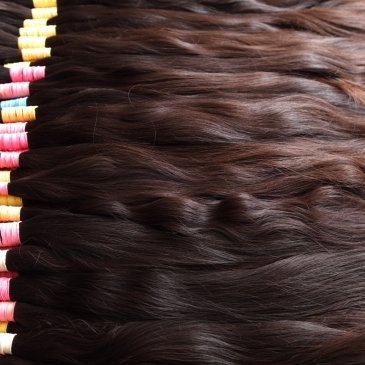
Bulk human hair is loose human hair supplied without being made into a finished wig or extension piece. Because the hair is not attached to a standard cap or weft in the same way as a finished product, stylists can use it for different hair applications depending on their techniques and customer requirements. For salons and businesses purchasing in larger quantities, reliable Indian human hair wholesale suppliers can provide different hair types and specifications to suit various styling and braiding needs.
For braiding salons, this flexibility can be valuable.
A stylist may need different lengths, textures, or quantities depending on the requested hairstyle. Bulk hair allows the professional to work with the material during the installation rather than being limited to the construction of a pre-made product.
However, not all bulk human hair is identical. Hair can differ in:
Origin
Length
Texture
Density
Drawing method
Processing level
Color
Cuticle condition
These differences should be considered before purchasing wholesale quantities.
Why Are Braiding Salons Choosing Human Hair?
The growing interest in human hair is largely connected to the flexibility it offers.
Unlike many synthetic fibers, human hair can provide a more natural movement and appearance. It can also offer additional styling possibilities when the hair has been properly processed and maintained.
For salons, the benefits can include:
A more natural-looking finish
Greater styling flexibility
Different texture options
Customization for individual clients
Opportunities to offer premium services
Better control over the final appearance
The suitability of human hair still depends on the specific hairstyle and installation method. A professional stylist should select the hair according to the client's natural hair, desired style, expected wear period, and maintenance routine.
Natural Appearance Is Important to Today's Clients
Many clients want braids that look polished without appearing excessively artificial.
Human hair can help create this effect because its movement and surface characteristics can resemble natural hair more closely than many synthetic alternatives.
This can be particularly useful when a style incorporates loose sections, curls, waves, or exposed hair. The closer the extension hair behaves to natural hair, the easier it can be for a stylist to create a cohesive overall appearance.
For salons, this also creates an opportunity to offer different levels of service. Customers who want a premium, natural-looking finish may be willing to choose human hair even when a synthetic alternative is available at a lower price.
Texture Selection Makes a Difference
Texture is one of the most important factors when selecting bulk hair for braiding.
Straight hair, wavy hair, and other textures can create completely different results. The right choice depends on the intended hairstyle and the client's desired appearance.
For example, Bulk Human Hair Straight Raw Hair can be considered for styles where a smooth and naturally flowing appearance is required.
Wavy textures can provide additional movement and volume, making them suitable for customers who want a softer or more textured finish.
Stylists should also consider how a texture behaves after washing and regular handling. A sample should ideally be tested before a salon commits to a large quantity.
Single Drawn vs Double Drawn Bulk Hair
The drawing method is another important consideration for salons buying human hair in bulk.
Single Drawn Hair
Single drawn hair generally contains strands of different lengths. As a result, the ends tend to have a more natural taper.
This can work well for customers who prefer a softer and less uniform appearance.
Double Drawn Hair
Double drawn hair is sorted more extensively so that the strands are more uniform in length. Shorter strands are removed, resulting in fuller and more consistent ends.
Salons may prefer Double Drawn Hair Bulk Human Hair when a customer wants a fuller appearance throughout the length.
Neither option is automatically better for every hairstyle. The appropriate choice depends on the customer's expectations, budget, desired density, and styling requirements.
Human Hair Gives Stylists More Styling Flexibility
One of the main reasons professional stylists use human hair is its versatility.
Depending on the specific hair and how it has been processed, human hair can generally be restyled using suitable methods. It can also provide a different visual result when compared with synthetic fibers.
This flexibility can be useful for salons that offer customized services.
A customer may want a braid style today and a different finish later. Human hair can give the stylist more options for creating and modifying the final look.
However, heat, chemical treatments, repeated washing, and poor maintenance can still damage human hair. Stylists should therefore provide customers with appropriate aftercare instructions rather than treating human hair as maintenance-free.
Quality Matters More When Hair Is Purchased in Bulk
Buying in bulk can reduce the need to place frequent small orders, but it also creates a greater quality-control responsibility.
A salon might receive dozens or hundreds of bundles or lengths in one purchase. If the hair varies significantly from one piece to another, maintaining consistent results across clients becomes difficult.
Before choosing a supplier, salon owners should evaluate:
Hair length consistency
Texture consistency
Density
Shedding
Tangling
Hair condition
Processing level
Packaging
Order accuracy
It is sensible to test samples before committing to a large wholesale order.
A sample can provide useful information about the actual product, but salons should also ask how the supplier maintains consistency in larger production batches.
Ethical Sourcing Is Becoming More Important
Hair sourcing is another consideration for salons and retailers.
Businesses increasingly want to understand where their products come from and how the raw material enters the supply chain. Suppliers should be able to provide clear information about their sourcing practices rather than relying only on broad claims such as “ethical” or “premium.”
For businesses selling human hair products, transparent sourcing can also make customer communication easier.
If a salon promotes ethically sourced hair, its claims should be supported by information from its supplier.
This is particularly important for businesses that want to build a long-term reputation rather than compete only on price.
Reliable Suppliers Help Salons Maintain Inventory
A salon's reputation depends partly on its ability to deliver consistent services.
Running out of a popular hair texture can mean turning away customers or substituting a product that does not produce the expected result. This is why reliable wholesale supply is important.
A professional supplier should be able to communicate clearly about:
Available textures
Length options
Minimum order quantities
Production timelines
Pricing
Packaging
Shipping
Product specifications
Replacement policies
Salons should avoid selecting a supplier based solely on the lowest price. Product consistency and reliable communication can be more valuable over the long term.
Bulk Buying Can Support Salon Operations
Purchasing hair in bulk can make sense for salons that regularly perform the same types of services.
For example, a salon with consistent demand for particular textures can maintain inventory instead of ordering small quantities for every appointment.
Bulk purchasing can potentially provide:
Better inventory planning
Fewer frequent orders
Consistent access to popular textures
More predictable product costs
Greater flexibility for stylists
However, salons should avoid purchasing more inventory than they can reasonably use. Hair preferences and customer demand can change, and excessive inventory can tie up business capital.
A better approach is to monitor which textures, lengths, and hair types are actually being requested before increasing order quantities.
Human Hair vs Synthetic Hair for Braiding
Synthetic hair remains widely used in braiding because it can be affordable, readily available, and suitable for many traditional and protective styles.
Human hair offers a different set of characteristics.
Feature | Human Hair | Synthetic Hair |
Appearance | Generally more natural | Can vary by fiber quality |
Movement | More natural movement | Often more uniform |
Styling flexibility | Generally higher | Depends on fiber type |
Price | Usually higher | Usually more affordable |
Maintenance | Requires hair care | Often easier for basic styles |
Customization | High | More limited depending on fiber |
The choice should depend on the hairstyle, client expectations, budget, and stylist's technique.
Human hair is not necessarily the right choice for every appointment. Its value is strongest when the customer specifically wants its natural appearance, styling flexibility, or premium finish.
How Salons Can Choose the Right Bulk Hair Supplier
Before placing a wholesale order, salon owners should evaluate the supplier carefully.
Start by requesting product samples and asking detailed questions about the hair.
Check the Product
Examine the texture, length, density, shedding, tangling, and overall appearance.
Ask About Processing
Find out whether the hair is raw, minimally processed, or chemically treated. Do not assume that every product described as “raw” has identical characteristics.
Review Order Terms
Understand minimum quantities, pricing, production time, shipping costs, and replacement policies before confirming the order.
Test Repeat Consistency
If you plan to become a regular customer, check whether future batches match your approved specifications.
Evaluate Communication
A supplier should be able to answer product and order questions clearly. Good communication becomes especially important when dealing with customized or large wholesale orders.
Why Quality Can Affect a Salon's Reputation
A salon does not only sell a hairstyle. It sells an experience.
If the hair is difficult to work with, sheds excessively, tangles quickly, or does not match what the customer expected, the stylist may have to spend additional time correcting the problem.
On the other hand, when the hair is appropriate for the style and meets the expected specifications, the installation process can be more predictable.
Customer satisfaction can influence repeat bookings, referrals, reviews, and the overall reputation of a salon.
That makes hair selection a business decision as well as a styling decision.
The Growing Role of Premium Hair in Braiding Services
African hair braiding continues to evolve, with stylists combining traditional techniques with modern textures, colors, lengths, and finishing methods.
As customers become more informed about hair products, salons have more reason to explain the differences between synthetic, human hair, single drawn, double drawn, raw, and processed options.
Bulk human hair fits into this changing market because it gives professionals another material with which to create customized styles.
The key is not simply choosing the most expensive hair. It is selecting hair that matches the service being offered and sourcing it from a supplier capable of maintaining consistent specifications.
Conclusion
The demand for bulk human hair in African hair braiding salons is driven by practical factors as much as appearance. Human hair can offer a natural finish, styling flexibility, and different texture options that allow professionals to create more customized looks.
For salon owners, however, product quality should be evaluated carefully before purchasing in bulk. Hair texture, drawing method, density, sourcing, processing, consistency, and supplier reliability can all affect the final result.
The best approach is to test samples, understand product specifications, monitor customer demand, and build relationships with suppliers who can consistently meet the agreed requirements.
For salons looking to expand their hair services, bulk human hair can become a valuable addition to their inventory when the product is selected according to real customer needs rather than marketing claims.
Frequently Asked Questions
1. Why do African hair braiding salons use bulk human hair?
Bulk human hair gives stylists flexibility because it is supplied as loose hair rather than a finished wig. It can be selected according to the hairstyle, texture, length, and appearance required for individual clients.
2. Is human hair better than synthetic hair for braiding?
Not for every hairstyle. Synthetic hair can be affordable and practical for many braiding services, while human hair is often selected when clients want a more natural appearance, movement, or additional styling flexibility.
3. What is the difference between single drawn and double drawn bulk human hair?
Single drawn hair generally has strands of different lengths and naturally tapered ends. Double drawn hair is sorted for more uniform lengths, producing fuller and more consistent ends.
4. What should salons check before buying bulk human hair?
Salons should check hair length, texture, density, shedding, tangling, processing, sourcing information, packaging, minimum order quantity, pricing, and supplier quality-control procedures. Testing samples is recommended before bulk purchasing.
5. Can bulk human hair be used for different braiding styles?
Yes, depending on the hair texture, length, and the particular braiding technique. Stylists can select different types of bulk hair to achieve different finishes and accommodate individual customer preferences.
6. How can a salon find a reliable bulk human hair supplier?
Request samples, compare product specifications, ask about sourcing and processing, review wholesale terms, and evaluate the supplier's communication and consistency. A small trial order is useful before establishing a long-term purchasing relationship.
7. Does buying bulk human hair help salons manage inventory?
It can. Salons with regular demand for specific textures or lengths may find bulk purchasing useful for maintaining stock and reducing the need for frequent small orders. Inventory levels should still be based on actual customer demand.
8. Why is ethical sourcing important when buying human hair?
Ethical sourcing provides greater transparency about where the hair comes from and how it enters the supply chain. Salons and retailers can use this information to make more informed purchasing decisions and communicate accurately with their customers.




 (1).jpg)


.jpg)


