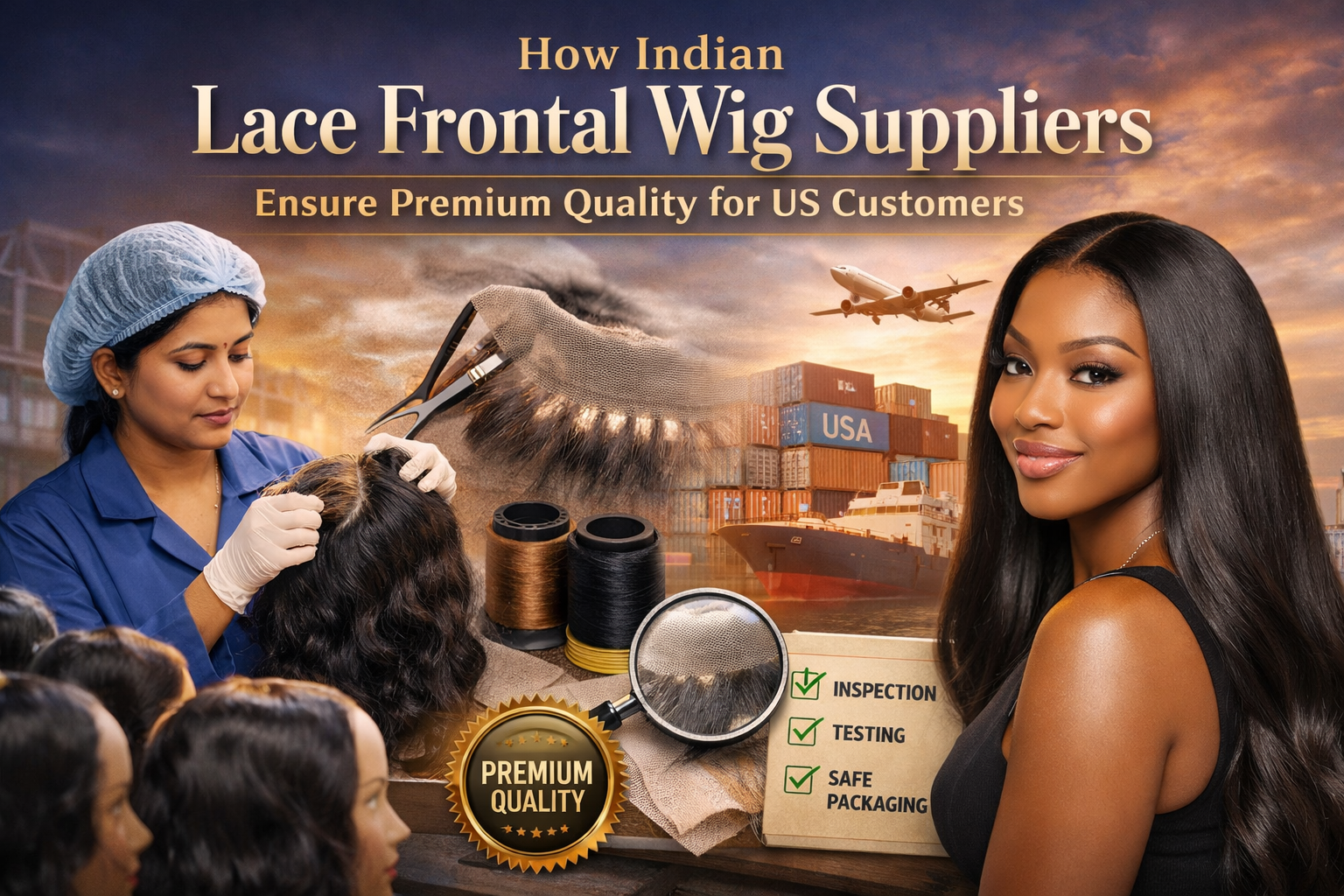
How Indian Lace Frontal Wig Suppliers Ensure Premium Quality for US Customers
US salons, beauty retailers, wig brands, and private-label businesses have many options when sourcing human hair products. However, finding a supplier that can consistently deliver the expected hair quality, construction, density, and finish is not always easy. Working with a reliable raw Indian hair supplier India can help businesses evaluate sourcing standards, product consistency, customization options, and wholesale capabilities before placing larger orders.
Indian lace frontal wig suppliers have become an important sourcing option for businesses looking for human hair products. India has established expertise in collecting, sorting, processing, and manufacturing human hair products, while experienced manufacturers can also provide customization and international wholesale services.
But being an Indian supplier alone does not guarantee premium quality. The quality of a lace frontal depends on several factors, including how the hair is sourced, how it is processed, how the wig is constructed, and how the finished product is inspected before shipment.
For US buyers, understanding these stages can make it easier to evaluate suppliers and choose products that match their brand and customer expectations.
Ethical and Responsible Human Hair Sourcing
Quality begins with the raw material.
Indian human hair can come from different legitimate sources, including voluntary temple donations and other collection channels. Buyers should ask suppliers to explain their sourcing practices rather than relying only on general claims about “premium” or “ethical” hair.
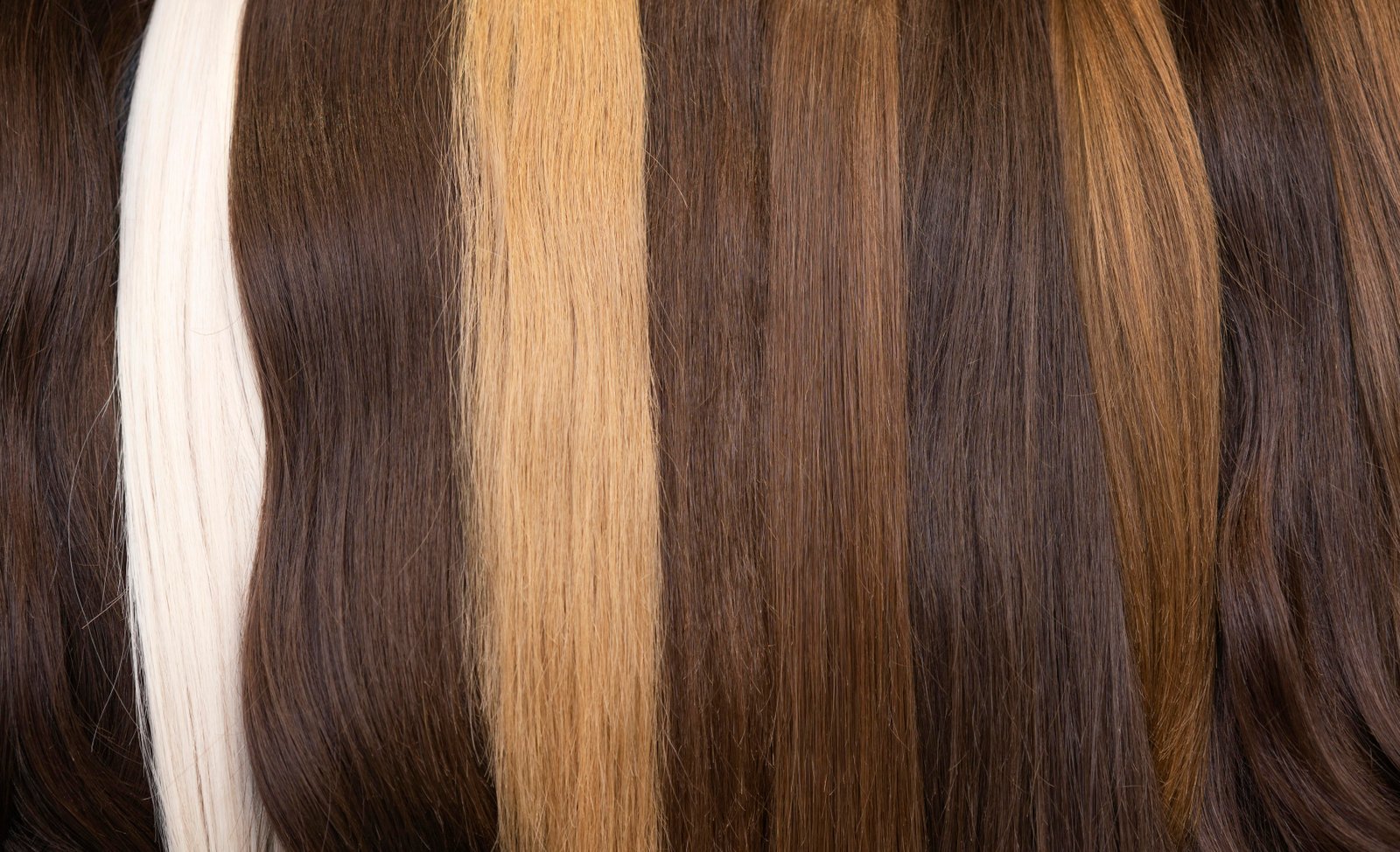
When hair is collected responsibly and sorted carefully, manufacturers can separate it according to characteristics such as length, texture, condition, and quality.
Cuticle direction is another consideration. Hair that has been handled and processed carefully can retain a more consistent cuticle direction, which may help reduce unnecessary tangling and maintain a natural appearance. When evaluating an Indian human hair factory, buyers should also ask about sourcing, processing methods, quality control, and how cuticle alignment is maintained throughout production.
For US retailers, sourcing transparency is therefore an important part of evaluating an Indian human hair supplier.
A professional supplier should be able to explain where the hair comes from and what happens to it before it becomes a finished lace frontal wig.
Minimal and Controlled Hair Processing
Once the hair has been sourced, it needs to be cleaned and prepared for production.
The processing method can have a significant effect on the final characteristics of human hair. Excessive chemical treatment may change the hair's texture, strength, and overall condition. When evaluating an Indian hair manufacturer and supplier, buyers should ask about the processing methods used, quality control procedures, and the level of chemical treatment involved before placing a wholesale order.
Quality-focused manufacturers generally pay attention to cleaning, sanitization, conditioning, drying, and sorting while avoiding unnecessary processing.
This is particularly relevant for human hair lace frontals because buyers often expect them to offer a natural appearance and styling flexibility.
However, US buyers should not assume that every product described as “raw hair” has exactly the same characteristics. The term can be used differently by different suppliers.
Before purchasing, ask:
Where is the hair sourced?
What processing has been performed?
Has the hair been chemically treated?
Are the cuticles aligned?
How is the texture maintained?
Does the hair match the product description?
Clear answers to these questions make it easier to compare suppliers accurately.
Skilled Construction Creates a More Natural Lace Frontal
The quality of the raw hair is only one part of the finished product. Wig construction is equally important.
A lace frontal requires individual strands of hair to be carefully attached to a lace base. The placement, knotting, density, and direction of the hair can all affect the final appearance.
Experienced wig makers pay particular attention to the hairline. A well-constructed hairline should look natural rather than appearing excessively dense or uniform.
Depending on the manufacturer's capabilities, buyers may also be able to request:
These options can be especially valuable for private-label brands that want their products to meet particular customer requirements.
The lace itself should also be appropriate for the intended product. Buyers should assess its appearance, construction, strength, and overall finishing before placing a large order.
Multi-Stage Quality Control Before Shipment
A reliable supplier should not wait until the final stage to check product quality.
Quality control can take place throughout production, from the initial sorting of the hair to the inspection of the finished wig.
Important checks may include:
Hair length
Hair density
Texture consistency
Shedding
Tangling
Lace condition
Hairline appearance
Knotting quality
Cap construction
Overall finishing
Product weight
Packaging
For wholesale buyers, batch consistency is especially important.
A sample may look excellent, but a business needs confidence that future orders will meet the same agreed specifications. This is why US retailers should ask suppliers about their inspection process and test samples before committing to significant inventory.
Buyers should also confirm how the supplier handles defective or incorrectly manufactured units.
Why Hair Texture Matters to US Buyers
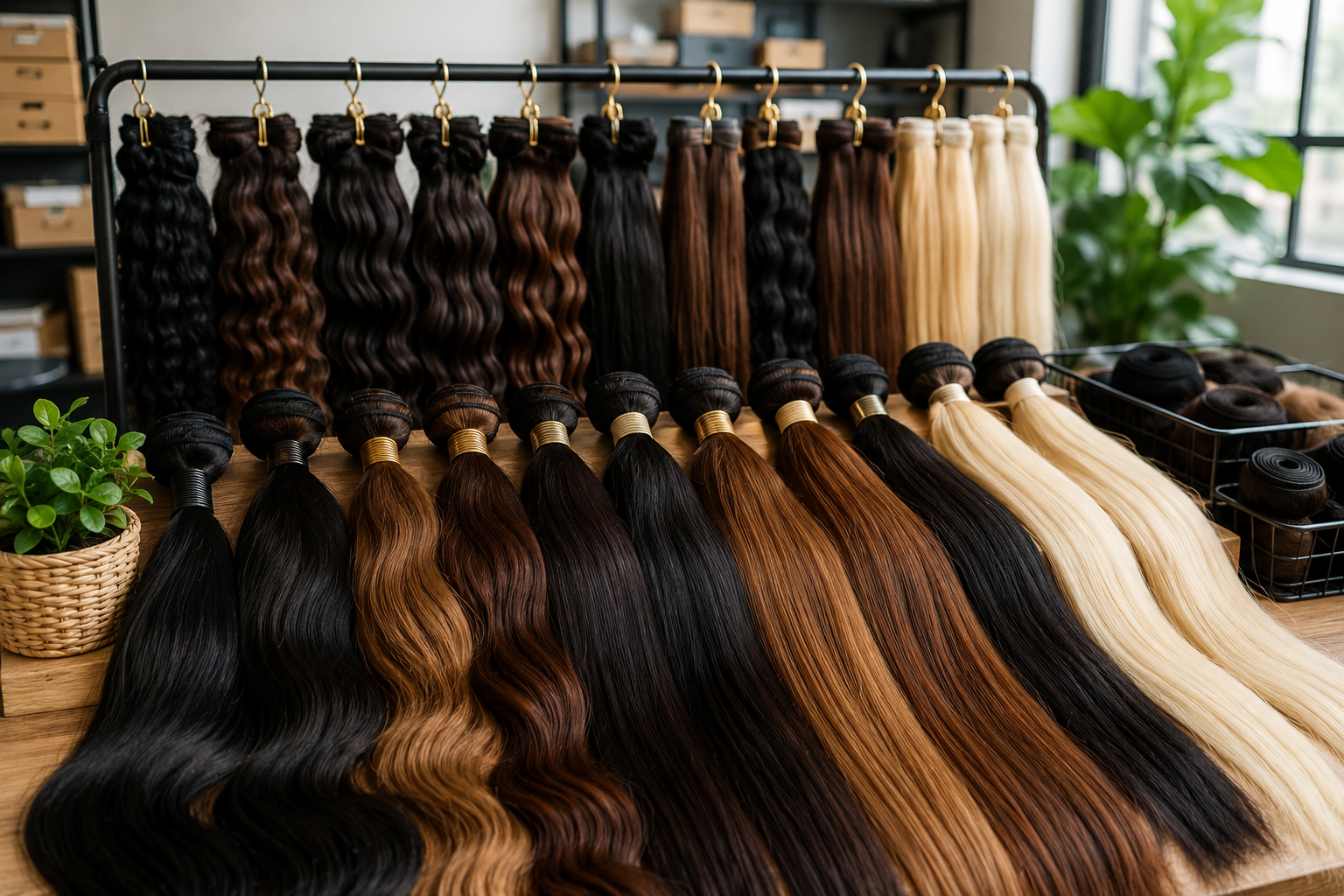
US customers have different styling preferences, so a supplier with multiple texture options can give retailers greater flexibility.
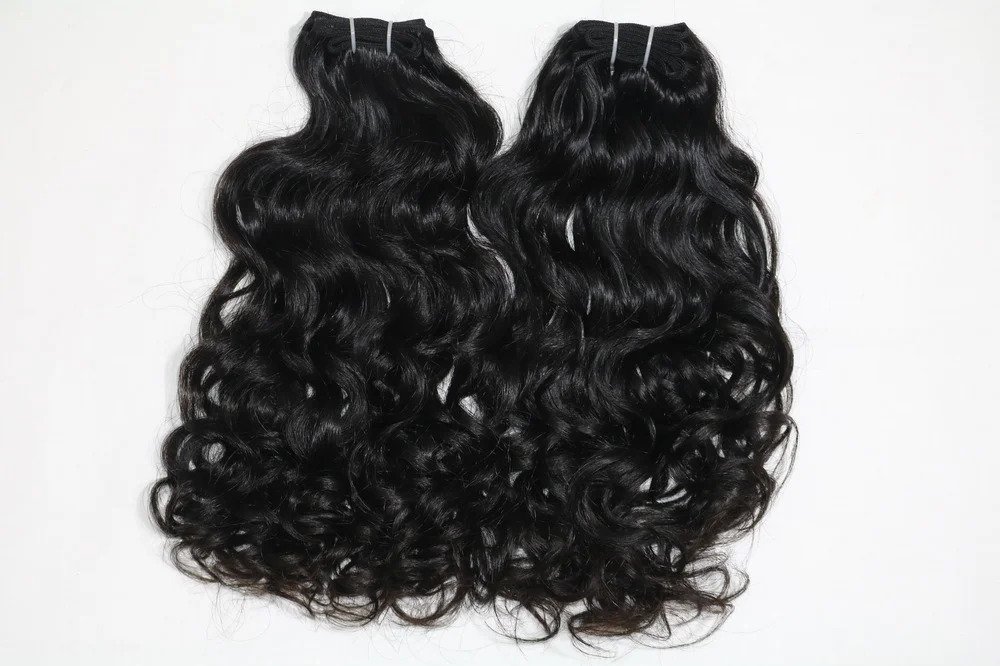
Straight and wavy human hair, for example, can create different finished looks.
Lace Frontals Straight Raw Hair can suit customers who prefer a smooth and sleek appearance, while Lace Frontals Wavy Raw Hair can provide more movement and texture.
However, texture should not be the only quality consideration.
US buyers should evaluate whether the hair:
Maintains its texture after washing
Sheds excessively
Tangled easily
Matches the supplied description
Maintains a natural appearance
Meets the expected density and length
Testing a sample before a wholesale purchase can reveal much more than relying on product photographs alone.
Modern Manufacturing Supports Consistent Production
Experienced Indian manufacturers may combine traditional wig-making skills with organized modern production facilities.
Different areas of a production unit can be used for:
Hair sorting
Cleaning and preparation
Wig construction
Finishing
Quality inspection
Packaging
Modern equipment can assist with production planning, inventory, packaging, and other repetitive processes. Detailed lace work and hair placement, however, can still require skilled manual craftsmanship.
This combination of organized production and experienced workers can help manufacturers handle wholesale orders while maintaining product specifications.
Storage and sanitation are also important. Human hair should be protected from excessive moisture, contamination, and poor handling throughout production and storage.
Private Label Options for US Wig Brands
For a US business building its own hair brand, manufacturing is not only about buying finished wigs. Product customization and branding can also be important.
Depending on the supplier, private-label services may include:
Private labeling allows a business to create a product range that reflects its own brand rather than simply reselling generic products.
Before placing a private-label order, buyers should confirm the minimum order quantity, customization charges, packaging specifications, sample approval process, production timeline, and shipping arrangements.
Approving a final sample before mass production is also a useful way to ensure that both parties have the same understanding of the finished product.
Packaging and International Shipping Matter Too
Product quality can be affected if a wig is poorly packaged or mishandled during transportation.
Finished lace frontals should be packaged carefully to protect the hair and lace from dust, moisture, crushing, and unnecessary friction.
For US buyers ordering from India, international shipping should also be discussed before the order is confirmed.
Ask the supplier about:
Shipping times can vary depending on the destination, courier, service level, customs processing, and other factors. A supplier should therefore provide a realistic estimate rather than promising the same delivery time for every order.
An experienced international supplier should be able to explain the shipping process clearly.
What US Buyers Should Check Before Choosing an Indian Supplier
Choosing a supplier based only on price can create problems later.
A cheaper product may become more expensive if it has inconsistent quality, excessive shedding, poor construction, delayed production, or unreliable shipping.
Before selecting an Indian lace frontal wig supplier, US businesses should evaluate:
Product Samples
Request samples and examine the hair personally before placing a large order.
Hair Specifications
Confirm the length, density, texture, hair type, processing level, and construction details.
Quality Control
Ask how the supplier checks products before they leave the manufacturing facility.
Production Capacity
Find out whether the manufacturer can handle your expected order volume and future growth.
Customization
Confirm whether private labeling, packaging, cap sizes, density, and other modifications are available.
Communication
A supplier should provide clear answers about specifications, pricing, production, and shipping.
International Experience
Ask whether the manufacturer regularly supplies international wholesale customers and understands the requirements involved in overseas shipments.
These checks can help US businesses identify suppliers that are suitable for long-term cooperation.
Why Consistency Matters More Than a Perfect Sample
A supplier's ability to produce one excellent wig is not enough for a growing business.
Imagine a retailer receives a sample that meets every expectation and then places a large order. If the production batch has noticeably different density, texture, length, or lace quality, the retailer may have difficulty selling the products under the same brand promise.
This is why consistency should be evaluated alongside appearance.
US buyers should compare several units whenever possible and keep the approved sample or product specification as a reference for future orders.
A reliable supplier should understand that repeat orders need to follow the agreed specifications as closely as reasonably possible.
Why US Retailers Work With Indian Human Hair Manufacturers
Indian manufacturers can offer US businesses access to different human hair products, textures, construction methods, and customization options.
However, the strongest supplier relationship is not based simply on the fact that the hair comes from India.
It depends on the manufacturer's ability to provide:
Consistent product quality
Transparent sourcing information
Skilled construction
Effective quality control
Customization
Reliable communication
Wholesale production
International shipping support
For retailers and private-label brands, these factors can be more important than simply finding the lowest price.
How to Build a Long-Term Supplier Relationship
Once you identify a manufacturer that meets your requirements, maintaining clear communication can make future orders easier.
Keep written records of your approved product specifications, including:
Hair type
Texture
Length
Density
Lace requirements
Cap measurements
Packaging
Branding
Quantity
Delivery requirements
When these details are clearly documented, both the buyer and manufacturer have a reference point for repeat production.
It is also useful to provide feedback after receiving an order. If a product needs improvement, explaining the issue with photographs, measurements, or specific observations is more effective than giving only general feedback.
Final Thoughts
Choosing an Indian lace frontal wig supplier should involve more than comparing product photographs and wholesale prices.
US businesses should examine the complete production process—from hair sourcing and processing to wig construction, quality inspection, packaging, and international shipping.
Samples should be tested before large orders, product specifications should be confirmed in writing, and suppliers should be evaluated for their ability to maintain consistency across repeat orders.
For brands looking for premium products, customization can also be an important consideration. A manufacturer that can support different textures, densities, lace options, and private-label requirements may provide greater flexibility as the business grows.
Ultimately, the right supplier is one that can consistently deliver products that match the agreed specifications and communicate clearly throughout the order process.
For US retailers, salons, and private-label businesses, that combination of quality, consistency, transparency, craftsmanship, and reliable supply is what turns a supplier relationship into a long-term manufacturing partnership.
Frequently Asked Questions
1. How do Indian lace frontal wig suppliers maintain product quality?
Quality can be maintained through careful hair sourcing, sorting, controlled processing, skilled wig construction, and multiple inspection stages. Buyers should also test samples and confirm product specifications before placing wholesale orders.
2. What should US buyers check when choosing an Indian lace frontal supplier?
US buyers should check hair sourcing, processing, length, density, texture, lace quality, construction, quality-control procedures, production capacity, customization options, shipping arrangements, and the supplier's wholesale experience.
3. Is raw Indian hair always better than processed human hair?
Not necessarily. “Raw hair” describes a type of sourcing or processing claim, but the term can be used differently by suppliers. Buyers should ask how the hair was sourced and processed instead of judging quality from the label alone.
4. Can Indian suppliers customize lace frontal wigs for private-label brands?
Many manufacturers offer customization options such as private-label packaging, logo tags, hair density, lace choices, cap sizes, and pre-plucked hairlines. The available options and minimum order quantities vary between manufacturers.
5. Why are product samples important before a wholesale order?
Samples allow buyers to examine the actual hair quality, texture, density, lace, construction, shedding, and finishing before committing to a larger purchase. They also provide a reference for evaluating future orders.
6. How can US buyers evaluate consistency between wholesale orders?
Buyers can keep an approved sample and written product specifications as a reference. Comparing the length, density, texture, lace, construction, and overall finishing of new batches against those specifications can help identify significant differences.
7. What should buyers ask about international shipping from India to the US?
Ask about shipping methods, estimated transit time, tracking, packaging, shipping charges, customs responsibilities, export documentation, and procedures for damaged or delayed shipments.
8. What makes a reliable Indian lace frontal wig supplier?
A reliable supplier should provide clear product information, consistent manufacturing, appropriate quality control, transparent communication, realistic production timelines, customization where required, and experience handling wholesale international orders.