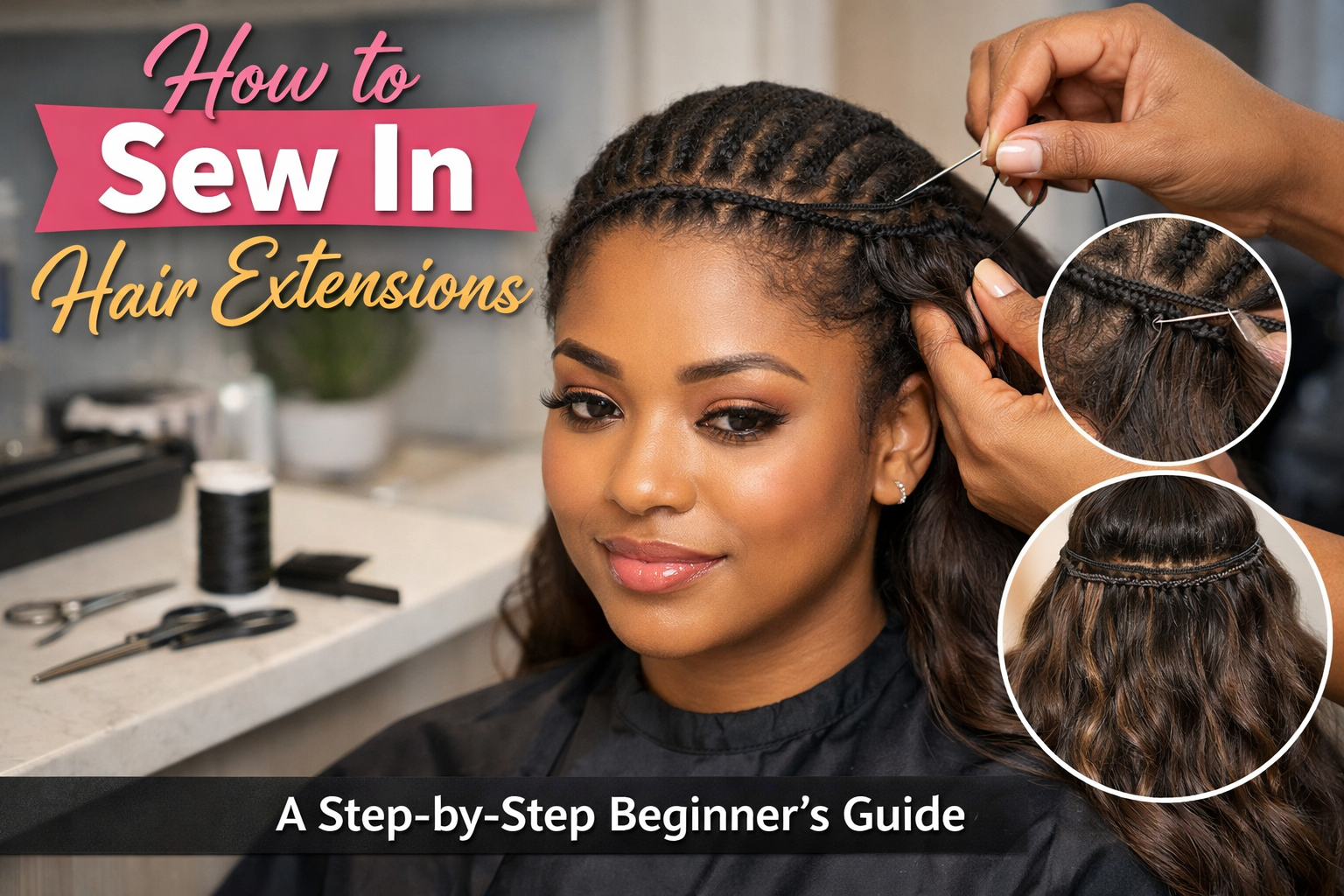
How to Sew In Hair Extensions: A Step-by-Step Beginner’s Guide
Sew-in hair extensions are a popular way to add length, volume, and styling versatility while keeping the extensions securely attached to a braided base. Unlike methods that rely on glue or adhesive, a traditional sew-in uses a needle and thread to attach weft hair extensions to cornrows created from the natural hair.
If you are learning how to sew in hair extensions for the first time, the process may seem complicated. However, understanding the preparation, braiding pattern, weft placement, stitching technique, and aftercare can make the process much easier to follow.
This beginner's guide explains how sew-in extensions work, which tools are needed, how to prepare the natural hair, and how to attach and style the extensions. It also covers common mistakes, maintenance, removal, and factors that can affect how long a sew-in style lasts.
Important: A sew-in should not cause significant pain or excessive tension. If the braids or extensions feel painfully tight, loosen or remove the installation and consider getting help from an experienced hairstylist.
What Are Sew-In Hair Extensions?
Sew-in hair extensions are hair extensions that are attached to a braided base using a weaving needle and thread. The natural hair is first divided into sections and braided into cornrows. Weft extensions are then sewn onto those braids.
This method is commonly used with human hair wefts and bundles because the extensions can be blended with the natural hair and styled after installation.
One advantage of a sew-in is that it does not require adhesive to attach the wefts. However, the installation still needs to be done carefully because excessive tension from tight braids or heavy extensions can put stress on the natural hair and scalp.
The final result depends on several factors, including the braiding pattern, extension quality, amount of hair used, stitching technique, and maintenance routine.
Tools You Need Before Installing Extensions
Having the right tools ready before starting can make the installation more organized and comfortable.
You will generally need:
Curved weaving needle
Weaving thread
Hair clips for sectioning
Rat-tail comb
Scissors
Hair bundles or wefts
Shampoo and conditioner
Lightweight moisturizing products
A spray bottle if needed for sectioning
A mirror for checking placement
The type and amount of hair required depend on the desired length, volume, hairstyle, and size of the client's or user's head.
Good-quality human hair wefts can also make a difference in the finished style. Human hair can generally be washed and styled more flexibly than many synthetic alternatives, although the exact styling performance depends on the hair quality and processing.
Step 1: Wash and Prepare the Natural Hair
Start with clean, detangled hair.
Wash the natural hair with a suitable shampoo and follow with conditioner. Make sure the scalp and hair are thoroughly cleaned before installation.
Allow the hair to dry completely before creating the braiding pattern.
Avoid applying excessive oils or heavy products immediately before braiding because they can make the hair slippery and make it harder to create a secure base.
Before continuing, check the scalp for areas of irritation, soreness, or other concerns. If the scalp is already irritated, postponing the installation can be a better option.
Step 2: Create the Cornrow Base
The cornrows provide the foundation for the sew-in extensions.
Use a rat-tail comb to divide the hair into sections. The exact pattern depends on the final hairstyle.
A straight-back pattern can work well for many beginner installations. A circular or beehive-style pattern may also be used when the goal is to create a smoother base for multiple rows of extensions.
The braids should be secure enough to support the extensions but should not be painfully tight.
Pay particular attention to the hairline and temples because these areas can be more sensitive to tension.
Once the braiding is complete, secure the ends neatly so they do not interfere with the stitching process.
Step 3: Measure and Prepare the Weft Hair Extensions
Before cutting any wefts, measure them against the individual cornrows.
When sourcing hair for regular salon services, businesses may compare different raw Indian hair vendors India based on hair quality, texture, length, and product consistency.
This helps determine the correct length for each row and reduces unnecessary waste.
For a traditional sew-in, some installers cut the weft to match the width of the section. Others fold the weft at the ends or use a continuous method depending on the installation technique.
If you want to reduce unnecessary shedding, avoid repeatedly cutting through the weft. The best method depends on the construction of the extension and the stylist's preferred technique.
For those working with salons or sourcing products professionally, Indian hair manufacturer and supplier are commonly used for sew-in installations because the weft provides a structured base for stitching.
Step 4: Thread the Curved Needle
Take the weaving thread and pass it through the eye of the curved needle.
Tie a secure knot at the end of the thread.
A curved weaving needle is commonly used because its shape makes it easier to pass through the braid and weft during the installation.
Choose a thread color that blends reasonably well with the hair or weft so that the stitching is less noticeable.
Avoid making the thread excessively tight while sewing. The goal is to secure the weft without creating unnecessary tension on the braided base.
Step 5: Start Sewing the Hair Extensions
Begin with the lowest row at the back of the head.
Position the first weft along the cornrow and insert the needle through the braid and weft. Pull the thread through and continue with controlled stitches along the row.
Keep the stitches reasonably even so the weft remains flat and secure.
As you move across the row, check that the weft is not twisting or bunching.
Continue working upward, following the planned braiding pattern.
For professional salon services, many businesses purchase wholesale hair extensions so they can maintain a selection of lengths and textures for different client requirements.
Salons looking for consistent weft products can also evaluate a raw Indian hair supplier India according to product specifications, wholesale availability, and quality-control practices.
How Tight Should the Stitching Be?
The stitching should hold the weft securely without pulling excessively on the braid.
If the braid moves significantly or the weft feels loose, additional stitching may be needed. If the installation creates pain or excessive tension, the problem should be corrected rather than simply adding tighter stitches.
Step 6: Fold or Secure the Weft at the Ends
When you reach the end of a row, the weft can be folded back depending on the installation method.
Folding can help avoid unnecessary cutting and can create a continuous finish at the end of the row.
Secure the end with appropriate stitches before moving to the next section.
Repeat the process until the planned areas of the head are covered.
Step 7: Check the Placement Before Styling
Once the extensions have been attached, inspect the entire installation.
Check for:
This is a useful stage for correcting small issues before styling.
Make sure the extensions are positioned according to the intended hairstyle and that the natural hair left out for blending can cover the wefts.
Step 8: Blend and Style the Extensions
The final step is blending the extensions with the natural hair.
Depending on the desired look, the hair can be:
Use heat protection when applying hot tools to human hair extensions and natural hair.
The amount of heat, styling frequency, and condition of the hair can affect its appearance and longevity.
If the installation includes leave-out hair, match the texture of the natural hair and extensions as closely as possible for a more seamless finish.
How Long Do Sew-In Hair Extensions Last?
A sew-in can often be worn for several weeks, but the exact duration depends on the installation, natural hair condition, scalp care, extension quality, lifestyle, and maintenance routine.
A commonly used maintenance period is around 6 to 8 weeks, but this should not be treated as a fixed lifespan for every person.
If the scalp becomes uncomfortable, the braids loosen, excessive matting develops, or the natural hair needs attention, the extensions should be checked or removed sooner.
Leaving a sew-in installed longer than appropriate can make cleansing and maintenance more difficult.
How to Maintain Sew-In Hair Extensions
Proper maintenance can help keep both the extensions and natural hair in better condition.
Keep the scalp clean
Clean the scalp regularly according to your hair type and the installation method. Avoid allowing heavy product buildup to accumulate around the braids.
Moisturize appropriately
Use lightweight products when needed. Excessive oils and heavy creams can contribute to buildup.
Protect the hair while sleeping
A satin or silk scarf or bonnet can help reduce friction while sleeping.
Avoid excessive tension
Do not repeatedly pull, tightly style, or manipulate the extensions.
Use heat carefully
If the extensions are human hair, use heat protection and avoid unnecessary high-temperature styling.
Monitor the scalp
Pay attention to soreness, itching, irritation, or unusual discomfort. These can be signs that the installation needs attention.
Benefits of Sew-In Hair Extensions
Sew-in extensions remain popular because they offer several practical benefits.
Secure attachment
The wefts are stitched to a braided foundation, providing a secure installation when applied correctly.
Versatile styling
Human hair extensions can generally be styled in different ways, depending on their quality and processing.
No adhesive required
Traditional sew-ins attach the extensions with thread rather than glue or adhesive.
Added length and volume
Sew-ins can provide additional length, density, or both.
Multiple texture options
Human hair wefts are available in different textures and lengths, allowing the final style to be customized.
Common Beginner Mistakes to Avoid
Even when following a step-by-step guide, beginners can make mistakes that affect comfort, appearance, and durability.
Braiding too tightly
Tight braids can cause discomfort and excessive tension. A secure foundation does not need to be painfully tight.
Skipping hair preparation
Installing extensions on dirty or heavily product-coated hair can make the process more difficult and may contribute to buildup.
Using too much hair
Adding excessive weight can place additional stress on the braided base.
Sewing the weft too loosely
Loose stitching can cause the extension to shift or sag.
Cutting every weft unnecessarily
Excessive cutting can increase waste and may contribute to shedding depending on the construction of the weft.
Ignoring scalp discomfort
Pain should not be treated as a normal part of the installation. If the scalp or hair feels excessively tight, the installation should be adjusted.
Choosing extensions without checking quality
Low-quality extensions may tangle, shed, or lose their appearance more quickly. Testing the product before a full installation can help identify quality issues.
When Should Sew-In Extensions Be Removed?
Sew-in extensions should be removed when the installation has become loose, uncomfortable, difficult to maintain, or when the natural hair needs proper cleansing and care.
For many installations, this may be around 6 to 8 weeks, but the appropriate timing varies.
Removal should be done carefully rather than pulling the wefts away from the braids.
Cut only the thread holding the weft and take care not to cut the natural hair underneath.
After removal, gently detangle the natural hair and cleanse it before deciding whether another installation is appropriate.
Can You Wash Your Hair With Sew-In Extensions?
Yes, the scalp and hair can generally be cleansed while wearing sew-in extensions.
However, washing should be done carefully.
Apply shampoo to the scalp and gently work it between the braided sections. Avoid aggressively rubbing or pulling the extensions.
Rinse thoroughly and allow the hair to dry properly.
Leaving the braids or scalp damp for an extended period can create an uncomfortable environment, so adequate drying is important.
The exact washing routine should depend on the person's scalp condition, hair type, extension material, and stylist's recommendations.
Are Sew-In Hair Extensions Suitable for Everyone?
Sew-in extensions can work with many hair types, but the installation should be adapted to the individual's natural hair condition, density, length, and scalp sensitivity.
People experiencing significant hair breakage, scalp irritation, or hair loss should consider consulting a qualified hairstylist before installing extensions.
The goal should always be a comfortable installation that does not place excessive tension on the natural hair.
Final Thoughts
Learning how to sew in hair extensions becomes easier when the process is divided into clear stages: prepare the natural hair, create a suitable cornrow base, measure the wefts, stitch them securely, check the installation, and blend the final style.
The quality of the extension hair also matters. Human hair wefts can provide styling flexibility, but the result depends on the hair quality, installation technique, maintenance, and individual hair condition.
For beginners, patience is more important than speed. Take time to create a comfortable foundation, keep the stitching controlled, and check the installation before styling.
If you are unsure about the braiding pattern, tension, or stitching technique, working with an experienced hairstylist can help protect the natural hair and produce a more consistent result.
Frequently Asked Questions
1. How long does it take to install sew-in extensions?
A sew-in installation can take approximately 2 to 4 hours depending on the amount of hair, braiding pattern, stylist's experience, desired style, and installation method.
2. Do sew-in hair extensions harm natural hair?
A properly installed sew-in does not have to damage natural hair, but excessive tension, heavy extensions, poor maintenance, or leaving the style installed for too long can contribute to breakage or scalp discomfort. The installation should always be comfortable and appropriate for the individual's hair condition.
3. How often should sew-in hair extensions be removed?
Many sew-in installations are maintained for around 6 to 8 weeks, but the appropriate removal time varies. The extensions should be removed sooner if there is pain, excessive tension, matting, loosening, or difficulty maintaining the natural hair and scalp.
4. Can you wash your hair with sew-in hair extensions?
Yes. The scalp should be cleaned regularly while wearing sew-in extensions. Washing should be gentle, and the hair and braided base should be dried properly afterward.
5. Are sew-in hair extensions suitable for all hair types?
Sew-in extensions can be adapted for many hair types, but the installation method should take the individual's hair density, condition, scalp sensitivity, and desired result into account. A professional stylist can help determine whether a sew-in is appropriate.




.jpg)
.jpg)