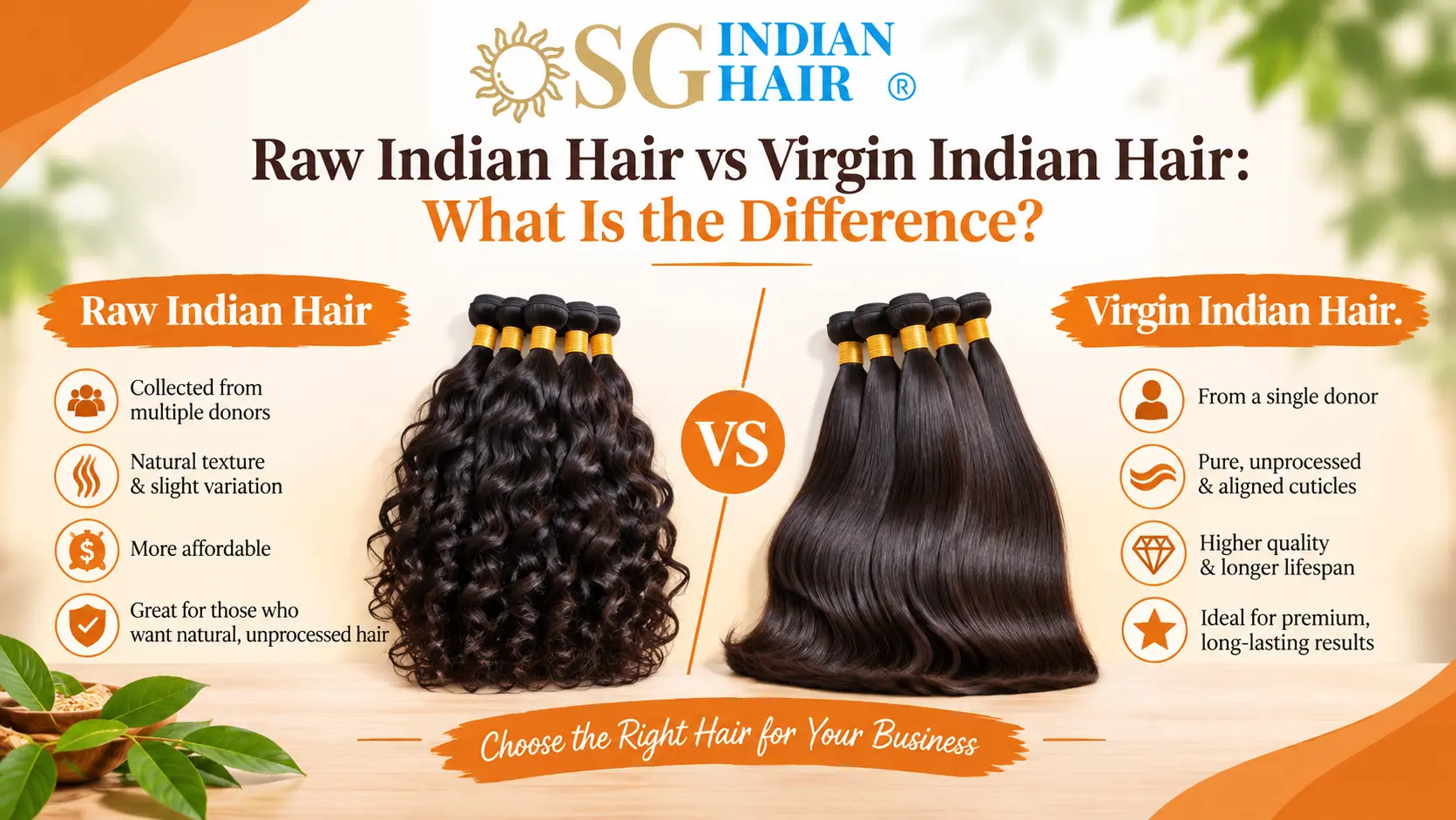
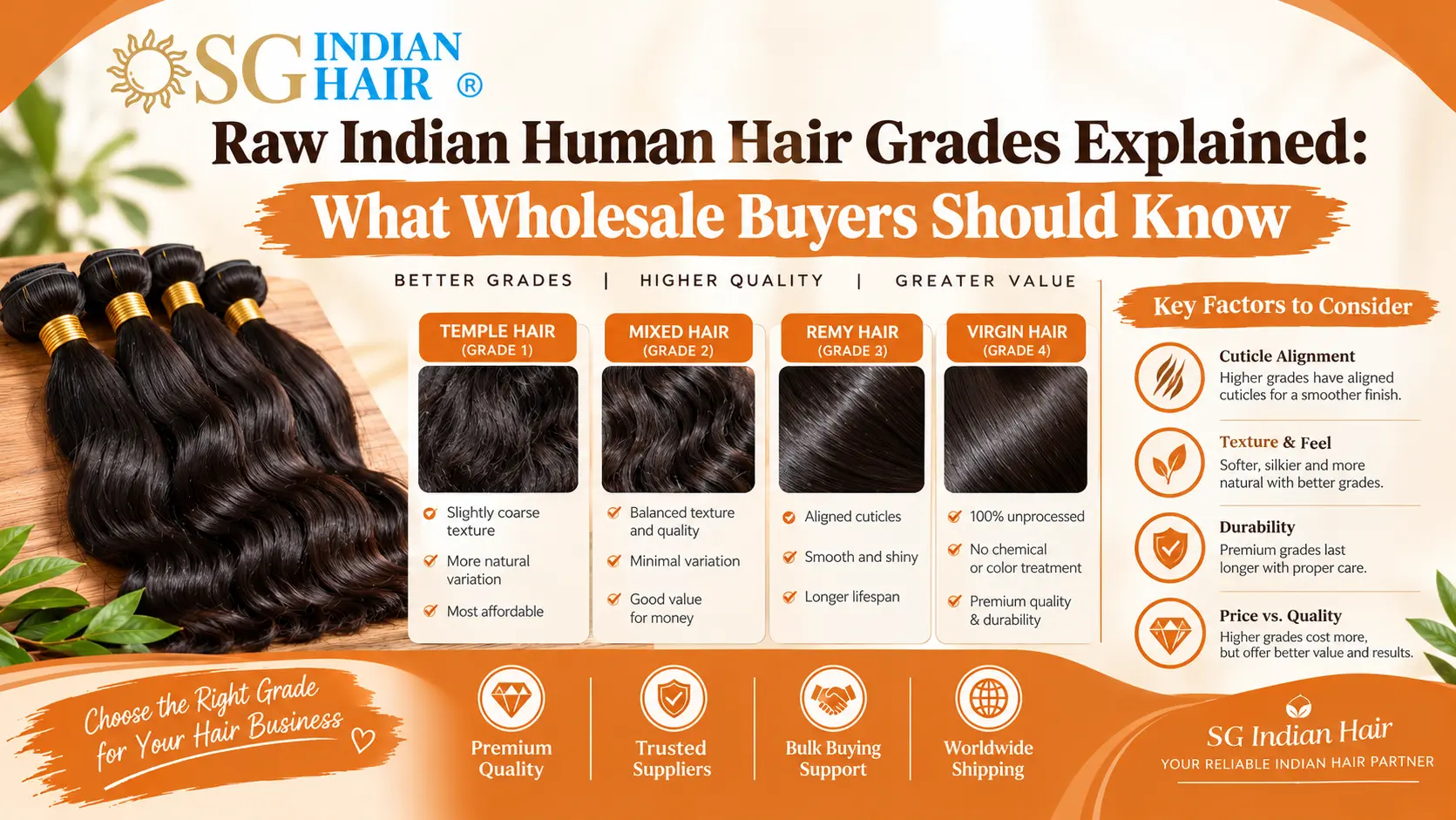
Raw Indian Human Hair Grades Explained: What Wholesale Buyers Should Know
Raw Indian human hair grades are an important consideration for anyone planning to buy hair in bulk for a salon, hair extension business, wig brand, or beauty supply store. Choosing the right grade helps you understand the hair's condition, expected lifespan, texture, and suitability for different customers.
Imagine you are placing your first wholesale order. A supplier offers several hair grades at different prices, and every option looks attractive in product photos. However, once the hair arrives, you may notice differences in softness, shedding, tangling, or overall appearance. This is why understanding hair quality before placing an order is essential.
In this guide, you will learn how hair grades work, what to check before buying, and how to select hair that meets your business needs.
What Are Raw Indian Human Hair Grades?
Raw Indian human hair grades are descriptions used by suppliers to communicate differences in hair quality, condition, consistency, and processing. However, there is no single grading system followed by every manufacturer. One supplier's grade may not match another supplier's grade.
Raw Indian hair is generally understood to be human hair collected and prepared with little or no chemical processing. Its natural texture and appearance can make it suitable for extensions, wigs, and other hair products.
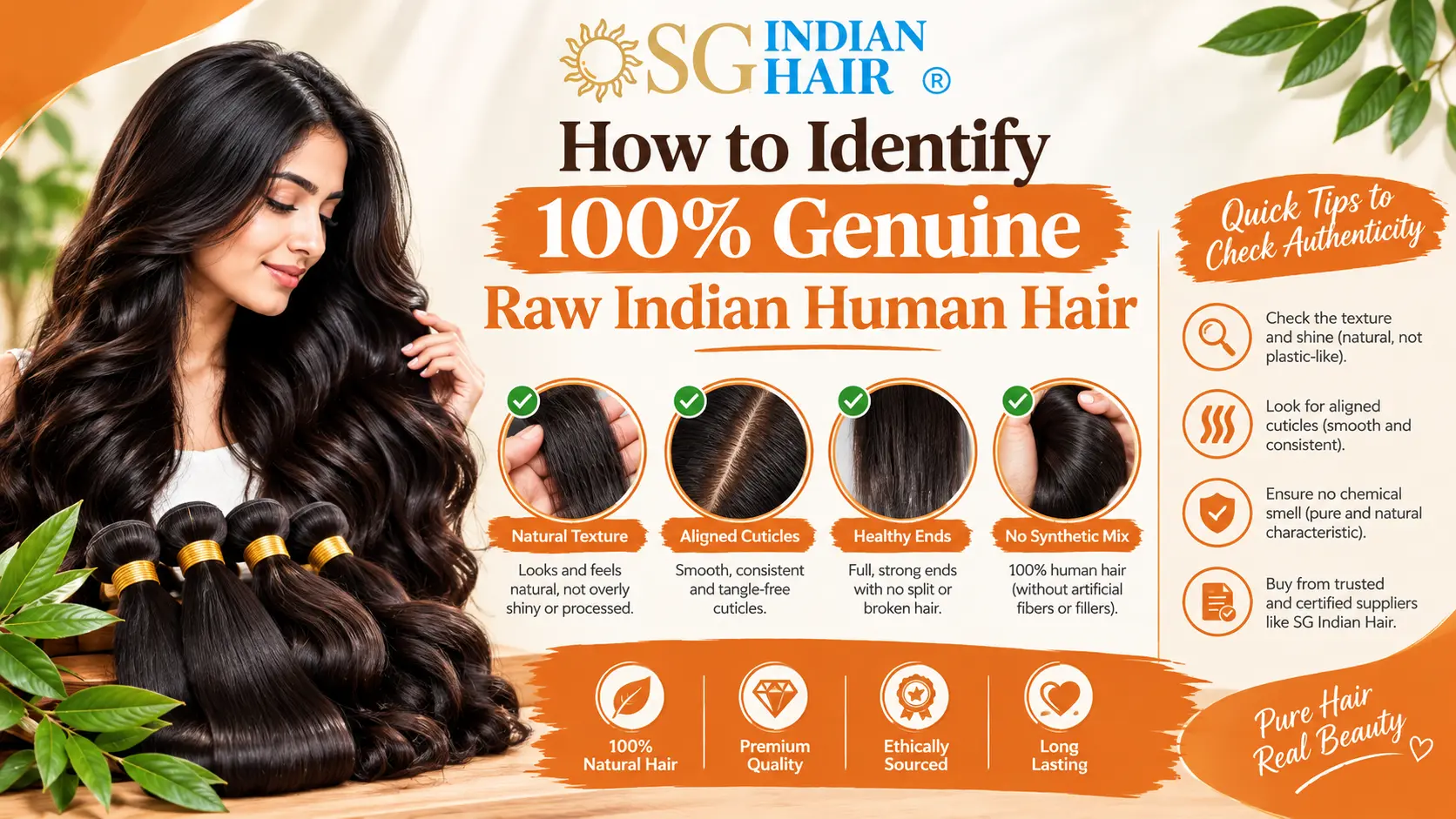
When evaluating grades, look beyond the label. Consider whether the hair is genuinely raw, how carefully it has been sorted, whether the cuticles are aligned, and how consistently the strands perform during use.
For wholesale buyers, the real value comes from understanding what each supplier means by a particular grade rather than relying on a number or letter alone.
Choosing the right supplier is just as important as understanding hair grades. Before placing a bulk order, buyers should compare product quality, sourcing practices, available textures, and customer feedback to make a more informed decision.
If you are researching the best raw Indian human hair vendors in India, use this resource to explore the business location and gather further information before making a purchasing decision.
Taking time to evaluate suppliers and request samples can help wholesale buyers check hair quality and determine whether a vendor meets their business requirements.
Common Raw Indian Hair Grades and Their Differences
Many hair suppliers use terms such as single drawn, double drawn, and super double drawn to describe the fullness of the hair and how evenly the strands are distributed by length. Understanding these terms helps buyers compare different hair types, choose the right product for their needs, and make informed purchasing decisions. However, these terms are not universal quality grades, so buyers should always check the actual hair length, thickness, and overall appearance before placing an order.
1. Single Drawn Hair
Single drawn hair usually contains strands of varying lengths, which gives the bundle a naturally tapered appearance with thinner ends. This makes it a good choice for customers who prefer natural-looking hair extensions with a soft, layered finish rather than a thick, full look. It can also be a practical option for buyers looking for an affordable hair extension range. Before placing an order, check the proportion of shorter strands, the bundle's thickness, and whether the hair matches the supplier's description to ensure you get the quality and look you expect.
2. Double Drawn Hair
Double drawn hair is carefully sorted to remove more of the shorter strands, giving the extensions a fuller, thicker appearance from the roots to the ends. This makes it a popular choice for customers who want a more even length and a naturally voluminous look. Since the sorting process requires extra work, double drawn hair usually costs more than similar single drawn hair. Before placing a bulk order, ask the supplier about the sorting process, available lengths, hair texture, bundle weight, and pricing to ensure you get the quality and thickness you need.
3. Super Double Drawn Hair
Super double drawn hair is carefully sorted to create a fuller, thicker look from root to tip, with fewer short strands left in the bundle. It is a popular choice for premium hair extension collections, especially for buyers who want thick, even ends and a more uniform finish. However, super double drawn hair does not automatically mean better hair health, longer-lasting quality, or superior raw hair. Before placing a bulk order, always check the actual bundles, compare samples from different suppliers, and assess the thickness, texture, shedding, and overall hair quality to make the right buying decision.
For European wholesalers, salon owners, and hair extension retailers, choosing a suitable supplier is essential for maintaining product consistency and meeting customer expectations. It is worth comparing available hair products and checking whether they match your preferred styles and business requirements.
Explore our Raw Indian Human Hair Supplier for Europe page to browse lace closures and discover options for your hair extension collection.
Selecting the right hair products and checking their quality before placing a bulk order can help you make more informed purchasing decisions.
Indian Human Hair Quality Standards: What Should You Check?
Understanding Indian human hair quality standards is essential because grading terms can vary between suppliers. A professional buyer should use clear inspection criteria instead of accepting a grade name as proof of quality.
Here are the main areas to evaluate.
Cuticle Alignment
Hair cuticles are the outer layers of individual strands. When they are aligned in the same direction, the hair may be less prone to tangling than hair with mixed cuticle directions.
Ask whether the hair is cuticle-aligned and whether the supplier can explain its sorting process. Remember that cuticle alignment alone does not guarantee a perfect product.
Texture and Softness
Good-quality hair should feel reasonably consistent with the texture advertised by the supplier. Check whether the strands feel excessively dry, rough, coated, or unusually slippery.
A silicone coating can make hair feel smooth at first but may hide its underlying condition. Washing a sample according to the supplier's care instructions can help reveal how it behaves after the coating is removed, if one is present.
Shedding and Tangling
Some shedding can occur during normal handling, but excessive shedding may indicate poor construction, weak stitching, or loose strands.
Run your fingers gently through a sample and check for tangles, especially near the ends. For extensions, examine the weft or attachment area as well as the loose hair.
Length and Weight
Confirm that the supplied hair matches the advertised length and weight. Longer hair can have different pricing and availability, so compare products on an equal basis.
A bundle that looks thick at the top may still have thin ends. Check the full length before deciding whether it meets your customers' expectations.
For European salons, hair extension retailers, and wholesale buyers, choosing a dependable supplier is important when sourcing Indian human hair. Before placing a bulk order, compare product specifications, available lengths, textures, and quality standards to ensure the hair meets your business requirements.
If you are exploring sourcing options for your business, visit our Raw Indian Human Hair Vendor for Europe page to browse available products and find suitable options for your customers.
Working with a supplier that provides clear product details can help you make informed purchasing decisions and maintain consistent quality for your customers.
Best Grade Indian Human Hair for Wholesale: How to Choose
The best grade Indian human hair for wholesale depends on your target customers, selling price, and product requirements. There is no single grade that works best for every business.
For example, a salon selling affordable everyday extensions may prefer single drawn hair because of its natural finish and price point. A premium extension brand may prefer double drawn or super double drawn hair because fuller ends are important to its customers.
Before making a decision, consider these factors:
Customer expectations: Decide whether your buyers prefer natural-looking layers or fuller ends.
Budget: Compare the cost per usable bundle rather than focusing only on the initial price.
Hair length: Check whether the supplier can consistently provide your most popular lengths.
Texture options: Confirm the availability of straight, wavy, curly, or other required textures.
Consistency: Make sure repeat orders can match the quality and specifications of your first order.
After-sales support: Ask how the supplier handles quality complaints, shortages, and products that do not match the agreed specifications.
A small sample order can help you test these factors before committing to a large purchase.
Indian Human Hair Grades for Bulk Buyers: What to Ask Suppliers
When purchasing Indian human hair grades for bulk buyers, consistency is just as important as appearance. A product that performs well in one order may disappoint customers if the next shipment has different lengths, textures, or levels of shedding.
Before confirming an order, ask the supplier the following questions:
Is the hair genuinely raw, or has it been chemically treated, steamed, dyed, or otherwise processed?
How are the hair grades defined and separated?
Are the cuticles aligned, and how is this checked?
What are the available lengths, textures, weights, and drawing options?
Can the supplier provide samples from the same product category as the bulk order?
What quality checks are completed before dispatch?
What happens if the shipment does not meet the agreed specifications?
For Indian human hair wholesale, written specifications are particularly useful. Record the agreed grade description, length, weight, texture, colour, processing status, packaging, and acceptable quality limits.
These details help reduce confusion between buyers and suppliers and make repeat orders easier to manage.
Choosing an experienced manufacturer is another important step for businesses purchasing hair products in bulk. Buyers should review product variety, construction quality, available styles, and consistency before placing an order.
Explore our Indian Human Hair Manufacturer collection to discover full lace wigs and explore options that may suit your salon, retail store, or wholesale business.
Comparing available products and confirming specifications with your supplier can help you select suitable hair products and maintain consistent quality for your customers.
Raw Indian Hair Quality Inspection Before Bulk Purchasing
Raw Indian hair quality inspection should take place before a large shipment is approved whenever possible. A practical inspection process allows you to compare the supplier's claims with the actual product.
Start by selecting samples from different bundles rather than checking only one attractive bundle. Inspect the roots, middle sections, and ends for differences in texture, thickness, and condition.
Next, gently comb the hair to check for tangling and excessive shedding. If the hair is intended for extensions, examine the weft construction and attachment points. You should also confirm the length and weight using suitable measuring tools.
Where chemical processing is a concern, ask the supplier for a written declaration of processing history. Appearance and touch alone cannot reliably prove that hair is completely unprocessed. If your business requires stronger verification, discuss suitable laboratory testing with a qualified testing provider.
Finally, keep a record of the inspection results. Photographs, sample labels, product specifications, and written approvals can help you compare future shipments against the original order.
Common Mistakes to Avoid When Buying Hair in Bulk
Even experienced buyers can make costly mistakes when choosing a hair supplier, especially when they focus only on low prices or promises of high quality.
One common mistake is thinking that a higher hair grade number always means better quality. In reality, grading systems differ from one supplier to another, so buyers should check the actual hair quality, texture, thickness, and durability before placing an order.
Another mistake is relying only on product photos. Good lighting, professional styling, and photo editing can make hair look thicker, smoother, and healthier than it really is. Always ask for clear videos or physical samples to check the hair before making a bulk purchase.
Some buyers also skip sample testing because they want to place orders quickly and save time. However, this can lead to bigger problems if the final shipment does not match the agreed specifications.
To avoid these mistakes, compare samples from different suppliers, confirm all product details in writing, and calculate your expected profit margin carefully. Include shipping, packaging, quality inspection, and possible product losses in your total cost. This approach helps you make better buying decisions, control expenses, and build a reliable hair business.
Conclusion
Understanding raw Indian human hair grades helps wholesale buyers make better purchasing decisions and build a reliable product range. Single drawn, double drawn, and super double drawn hair offer different levels of fullness, but these terms should not replace a proper quality assessment.
Before placing a bulk order, check cuticle alignment, texture, shedding, tangling, length, weight, and processing history. Ask suppliers for samples and written specifications, and inspect the product before approving a large shipment.
The goal is not simply to buy the highest-priced grade. It is to find hair that consistently meets your customers' expectations, fits your budget, and supports your business over the long term.
Frequently Asked Questions
1. What are raw Indian hair grades used for?
Raw Indian hair grades help buyers compare products based on factors such as length distribution, fullness, texture, and processing. Since suppliers may use different grading systems, always request a clear explanation of each grade before ordering.
2. How can buyers check Indian human hair quality standards?
Buyers can assess quality by checking cuticle alignment, softness, shedding, tangling, length, weight, and consistency. Written specifications and sample testing provide a more reliable assessment than a supplier's grade label alone.
3. Which is the best grade Indian human hair for wholesale?
The best grade depends on the intended customer and product requirements. Single drawn hair offers a more layered appearance, while double drawn and super double drawn hair generally provide fuller ends. Compare samples and prices before choosing.
4. What should Indian human hair grades for bulk buyers include?
Indian human hair grades for bulk buyers should be supported by clear details about processing, length, weight, texture, fullness, cuticle alignment, and quality checks. These specifications help buyers compare suppliers and maintain consistency across orders.
5. Why is raw Indian hair quality inspection important before placing a bulk order?
Raw Indian hair quality inspection helps identify problems such as excessive shedding, tangling, inconsistent lengths, and poor bundle construction before the full shipment is accepted. It can reduce customer complaints and protect your business investment.




.jpg)