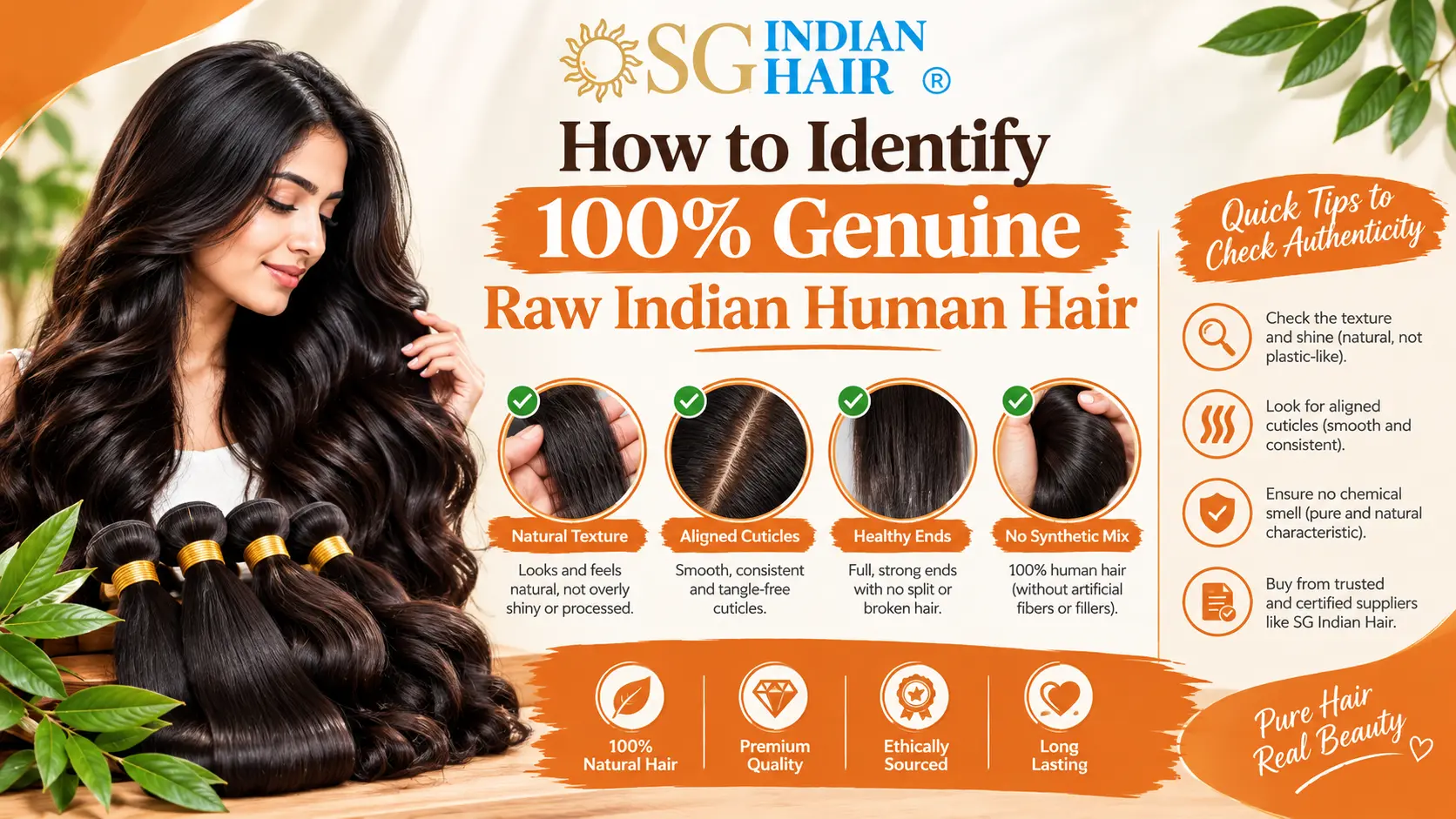
How to Identify 100% Genuine Raw Indian Human Hair
Genuine raw Indian human hair is a popular choice for wig makers, hair extension brands, salons, and wholesale buyers who want natural-looking hair with good texture and durability. However, finding real raw hair is not always easy. Many products look natural at first but may contain processed, mixed, or coated hair. If you are planning to buy hair for personal use or business, learning how to check its quality can help you avoid costly mistakes.
Imagine ordering a large batch of hair for your salon or online store. The samples look soft and beautiful, so you place a bigger order. After a few washes, the hair becomes dry, tangled, and difficult to manage. This is exactly why you should understand what genuine raw Indian human hair looks like before making a purchase.
In this guide, you will learn how to identify authentic hair, what quality signs to check, and how to choose a reliable supplier.
What Is Genuine Raw Indian Human Hair?
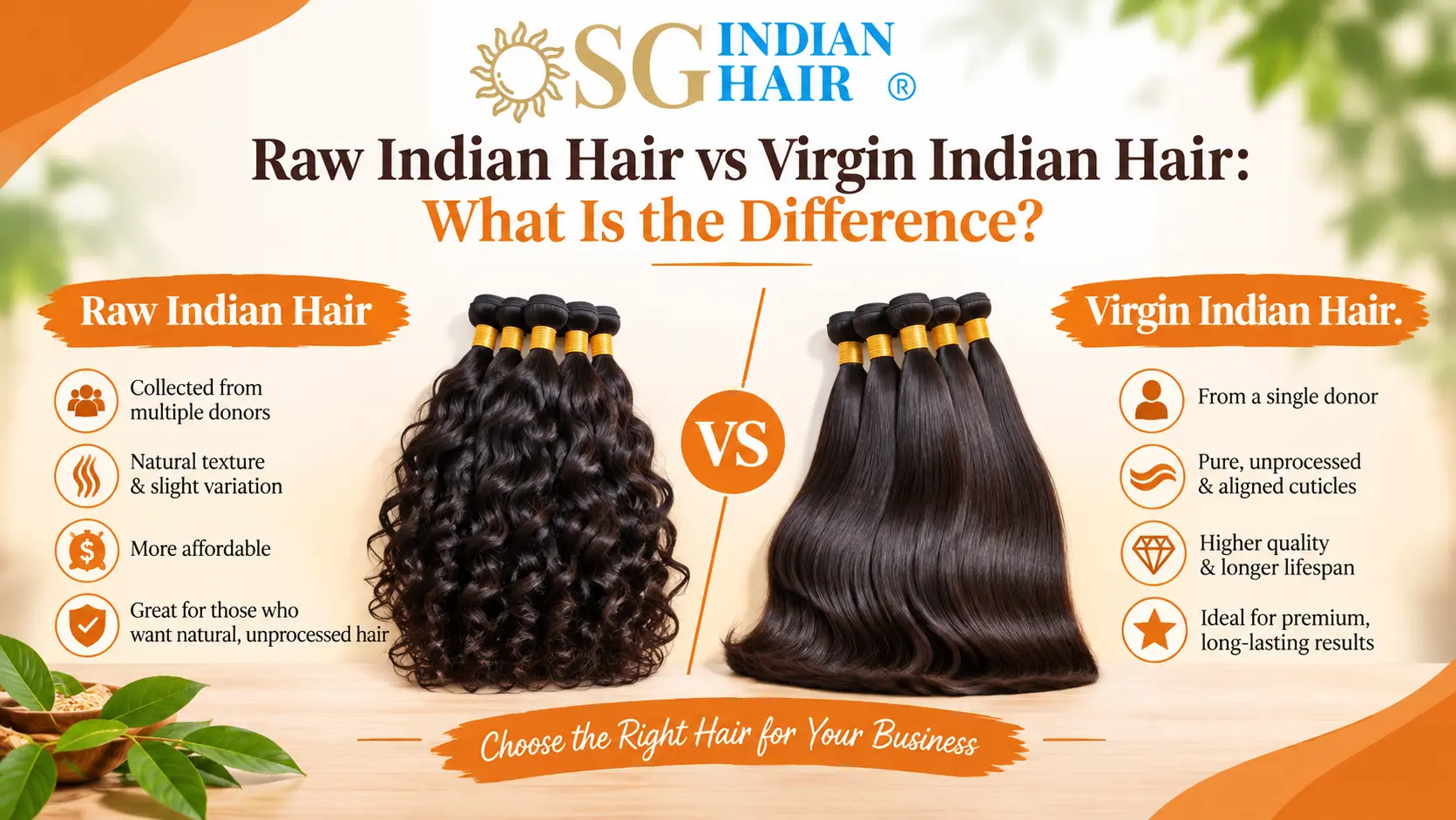
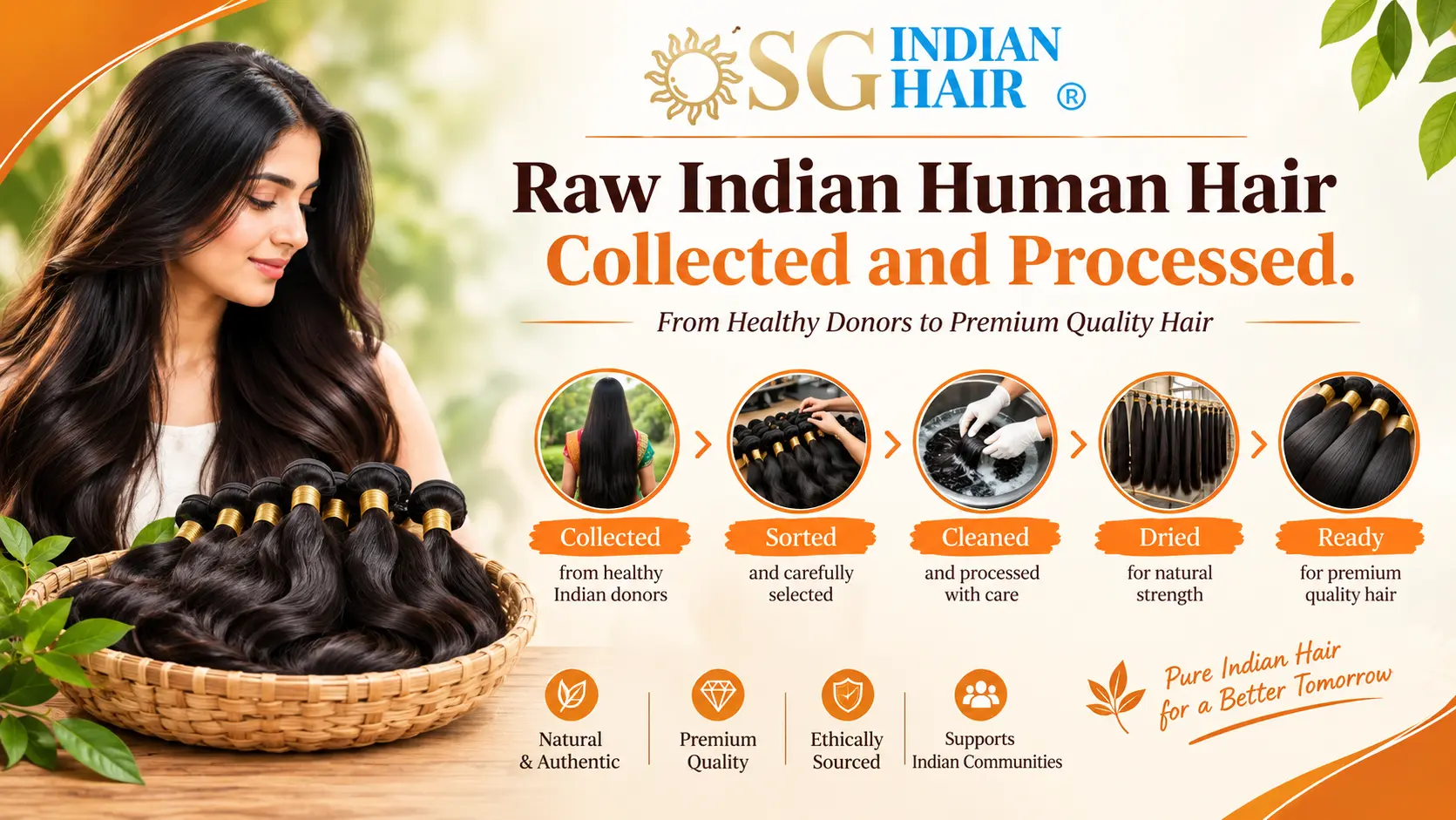
Genuine raw Indian human hair is hair collected from human donors and supplied with minimal chemical processing. Depending on the supplier and collection method, the hair may be sorted, cleaned, washed, and prepared for use, but it is generally not chemically altered to create a specific texture.
Raw hair is valued because its natural texture, movement, and appearance are preserved. It may be straight, wavy, or curly, depending on the donor's original hair.
Unlike heavily processed hair, authentic raw hair can show small differences in strand thickness, natural colour, and texture. These differences are normal because real human hair does not always look identical from one strand to another.
However, the word "raw" is not a guarantee of quality by itself. Buyers should check the supplier's information, sample products, and handling practices before placing an order.
For UK businesses looking to source Indian human hair, choosing suitable products from a dependable supplier is an important step. Comparing available hair categories and product options can help salon owners, retailers, and wholesale buyers find products that match their customers' needs.
Explore our Raw Indian Human Hair Vendor for UK Buyers to browse available product categories and discover options for your hair business.
Reviewing product details and discussing your requirements with the supplier can help you make a more informed purchasing decision.
7 Signs of Genuine Raw Indian Human Hair
Recognising the signs of genuine raw Indian human hair becomes easier when you know what to look for. Here are seven practical checks you can perform before buying.
1. Check the Natural Hair Texture
One of the first things to check when buying raw Indian human hair is its natural texture. Genuine raw hair usually keeps its original pattern without the uniform look that can result from chemical processing.
For example, naturally wavy hair may have small differences in wave size and shape, while straight hair may fall slightly differently from one strand to another. These natural variations are common in unprocessed human hair.
However, raw hair can still be sorted into straight, wavy, and curly categories to meet different buyer needs. A consistent texture does not automatically mean the hair is fake. Always check other quality signs, such as how the hair feels, how it responds to washing, and whether the supplier can provide reliable details about its collection and processing.
2. Look for Natural Colour Variations
Natural human hair can have slight colour variations, with a mix of darker and lighter brown strands. These differences are common in hair collected from different donors and can help maintain a natural appearance. If every strand looks exactly the same in colour and finish, ask the supplier whether the hair has been dyed or coated. However, consistent colour does not always mean the hair has been processed, as some natural hair collections have very similar shades.
3. Examine the Hair Cuticles
Hair cuticles are the outer layers of each hair strand, and their condition affects how smooth the hair feels and how easily it tangles.
When hair cuticles are aligned in the same direction, the strands usually experience less friction, making the hair easier to comb and manage. Before buying, ask the supplier whether the hair is cuticle-aligned and how they check its condition.
A visual check alone cannot confirm the cuticle condition. For better results, request product details and test a sample by washing, drying, and styling it to see how the hair feels and behaves.
UK salon owners, hair extension retailers, and wholesale buyers should also compare suppliers carefully before placing bulk orders. Checking product specifications, hair textures, available styles, and sample quality can help you choose products that meet your customers' expectations.
If you are exploring sourcing options, visit our Raw Indian Human Hair Supplier for UK Buyers to browse available hair products and find options for your business.
Reviewing the available products and confirming their specifications with the supplier can help you make a more informed purchasing decision.
4. Perform a Gentle Touch Test
Run your fingers through a small section of hair to check its texture and softness. Good-quality hair should feel smooth, soft, and natural without too much roughness or tangling. Check the roots and ends carefully, as both areas can reveal differences in hair quality.
If the hair feels overly slippery or has an unusual coating, it may have been treated with silicone or other products to make it look smoother. This does not necessarily mean the hair is poor quality, but you should check how it feels after washing. Genuine raw Indian human hair should retain its natural texture and remain manageable with proper care and regular use.
5. Wash a Small Hair Sample
A simple wash test can help you notice details that are easy to miss when examining dry hair. Use a mild shampoo and follow the supplier’s care instructions to wash the sample gently. Let the hair air-dry naturally, then check whether it feels soft, retains its natural texture, and stays easy to comb without excessive tangling.
Some hair may feel slightly different after washing because the surface products have been removed. Pay attention to how the strands behave when wet and dry, whether they develop knots, and how easily you can manage them. If the sample remains soft, smooth, and reasonably tangle-free after proper care, that is a more reassuring sign. However, a wash test alone cannot confirm whether the hair is 100% raw Indian human hair, so always check the supplier’s product details and request reliable information about its processing history.
6. Check for Excessive Shedding and Tangling
Gently comb through the hair with a wide-tooth comb, starting at the ends and working your way up to the roots. Watch how easily the strands separate and whether they tangle or form knots along the way.
Some shedding is normal, but excessive hair fall may point to weak weft construction, damaged strands, or poor hair preparation. Before choosing a bundle or extension, check how securely the hair is attached and whether the strands remain smooth during combing. Remember, good hair quality and proper construction both play an important role in reducing tangles and shedding and keeping the extensions in good condition for longer.
7. Request Clear Product Information
A trustworthy raw Indian human hair supplier should clearly explain where the hair comes from, how it is collected, which textures and lengths are available, whether it has been chemically treated, and what quality checks are carried out. Before placing a bulk order, ask these questions and request a sample to check the hair's quality, texture, and durability rather than relying only on product photos or claims like “premium quality” and “100% natural.”
For hair businesses in the United States, choosing the right supplier also means finding products that match customer preferences and styling requirements. Comparing available hair products before placing a wholesale order can help salon owners, retailers, and distributors make more informed purchasing decisions.
Explore our Raw Indian Human Hair Supplier for USA Buyers to browse lace frontal options for different hairstyles and customer needs.
Reviewing product details and confirming specifications with your supplier can help you select suitable products for your business and build a more reliable sourcing process.
How to Evaluate Raw Indian Human Hair Quality
Understanding raw Indian human hair quality is especially important if you plan to sell extensions, manufacture wigs, or supply salons.
Start by checking the following factors:
Texture and consistency: The hair should match the texture described in the product listing. Natural variation is acceptable, but the overall batch should meet the agreed specifications.
Length and usable hair: Confirm how the supplier measures length. Curly hair may measure differently when stretched compared with its natural curl pattern. Also check whether the ends are full enough for your intended use.
Strength and condition: Hair should withstand careful handling, washing, and suitable styling without unusual breakage.
Tangle resistance: Test the hair after washing and drying. Excessive tangling, particularly near the nape area of a finished wig or extension, can affect customer satisfaction.
Colour and processing: Ask whether the hair is natural, coloured, bleached, steam-processed, or treated with coatings. These details help you choose the right product for your customers.
Remember that even authentic raw hair can vary in quality. Donor characteristics, sorting, storage, and preparation all affect the final product.
Genuine Raw Indian Human Hair vs. Processed Hair
Both raw and processed human hair have their own uses in the hair industry, depending on what buyers need.
Raw human hair usually keeps more of its natural texture, while processed human hair may be coloured, chemically treated, steamed, or styled to achieve a particular look.
For example, buyers who prefer natural waves and slight texture differences may choose raw hair. On the other hand, wig makers who need bundles with matching curl patterns may prefer processed hair because it offers a more uniform appearance.
The right choice depends on your budget, styling needs, expected hair lifespan, and the quality of the supplier's products.
Before buying, avoid claims that raw hair never tangles, never sheds, or lasts forever. Both raw and processed human hair need proper care, and their quality depends on how the hair is treated, prepared, maintained, and used.
For businesses in the USA looking to expand their hair product range, choosing suitable lace products can also help meet different customer styling preferences. It is worth reviewing the available options and checking product details before placing a wholesale order.
Explore Raw Indian Human Hair Vendor for USA Buyers to browse lace frontals and find options that may suit your salon, wig-making, or hair extension business.
Comparing product options and understanding your customers' needs can help you make more informed purchasing decisions.
How to Choose a Reliable Raw Indian Human Hair Manufacturer
Selecting a reliable Raw Indian human hair manufacturer is just as important as checking the product itself. A supplier should provide clear details and allow you to assess the hair before making a large commitment.
Consider these points when comparing manufacturers:
Ask for samples: Test a small quantity before approving a bulk order.
Check product specifications: Confirm the length, texture, colour, weight, and processing status in writing.
Request real product photographs: Ask for recent images and videos of the actual hair rather than relying entirely on catalogue pictures.
Understand quality control: Find out how the supplier sorts, cleans, inspects, and packs the hair.
Review business information: Check the company's contact details, business history, payment terms, and customer feedback.
Confirm return and replacement terms: Understand how damaged, incorrect, or inconsistent goods will be handled.
Keep written records: Save the agreed specifications, sample approval, invoice, and order details.
A professional supplier should be willing to answer reasonable questions. Clear communication before payment can help prevent misunderstandings later.
Tips for Buying Genuine Raw Indian Hair in Bulk
Buying in bulk can reduce the cost per bundle, but a large order also increases your financial risk. Before ordering genuine raw Indian human hair in bulk, follow a careful purchasing process.
First, decide which textures, lengths, and colours your customers need most. Ordering a wide range of products without checking demand can leave you with stock that takes months to sell.
Next, request samples from more than one supplier. Compare their products under similar conditions, including washing, drying, and gentle combing. Do not judge hair only by its appearance immediately after unpacking.
Once you select a supplier, discuss the minimum order quantity, payment schedule, delivery time, packaging, and shipping costs. Ask whether the bulk batch will match the approved sample and what happens if it does not.
It is also sensible to start with a smaller order before increasing your purchasing volume. Keep a record of each batch, including supplier details, product specifications, and any quality issues.
These steps can help you build a more reliable supply chain and protect your business reputation.
How to Care for Original Indian Human Hair
Even original Indian human hair needs proper care to maintain its natural look, softness, and manageability for a longer time.
Use a mild shampoo and a good conditioner to keep the hair clean and smooth. Avoid rubbing the strands too hard while washing, and gently detangle them with a wide-tooth comb. Start from the ends and slowly work your way up to prevent pulling and breakage.
Before using heat styling tools, apply a suitable heat protectant and keep the temperature at a safe level. Let the hair dry completely before storing it, and keep wigs or extensions in a clean, dry place away from dust and moisture.
Curly and wavy hair needs extra care to maintain its natural pattern. Avoid rough brushing and heavy styling products, as they can affect the hair's texture and appearance.
Regular maintenance helps keep original Indian human hair looking natural, smooth, and easy to manage. While proper care cannot reverse all types of damage, it can reduce unnecessary wear and help extend the life of the hair.
Final Thoughts
Choosing genuine raw Indian human hair requires more than trusting a product label. You need to examine the texture, check how the hair behaves after washing, review its construction, and ask the supplier clear questions.
Whether you are buying a single bundle or sourcing products for a hair business, start with samples and verify the details before placing a large order. A little research at the beginning can help you avoid disappointing products, unexpected expenses, and unhappy customers.
Most importantly, choose a supplier that values honest product descriptions, consistent quality checks, and clear communication. These are the foundations of a better buying experience and a stronger long-term business relationship.
Frequently Asked Questions
1. How can I identify 100% raw Indian human hair?
Check the supplier's processing information, natural texture, and product specifications. Wash a sample and observe how it behaves afterward. No single visual test can prove that hair is completely unprocessed, so reliable documentation and sample testing are important.
2. What are the main signs of genuine raw Indian human hair?
Common signs include natural texture variation, manageable strands, suitable cuticle alignment, and reasonable performance after washing. However, these signs are not conclusive proof of authenticity. Always evaluate the sample alongside the supplier's claims and quality information.
3. What affects raw Indian human hair quality?
Several factors affect quality, including the condition of the original hair, cuticle alignment, processing methods, sorting, weft construction, and storage. Proper care also influences how the hair performs over time.
4. How do I choose a reliable raw Indian human hair manufacturer?
Look for a manufacturer that provides clear specifications, samples, transparent processing information, written order terms, and responsive customer support. Compare the actual products before deciding which supplier best meets your requirements.
5. What are the best tips for buying genuine raw Indian hair in bulk?
Request samples, test the hair after washing, confirm the length and texture, and get all product specifications in writing. Check minimum order quantities, shipping charges, payment terms, and replacement policies before placing a bulk order.




.jpg)