How Is Raw Indian Human Hair Collected and Processed?
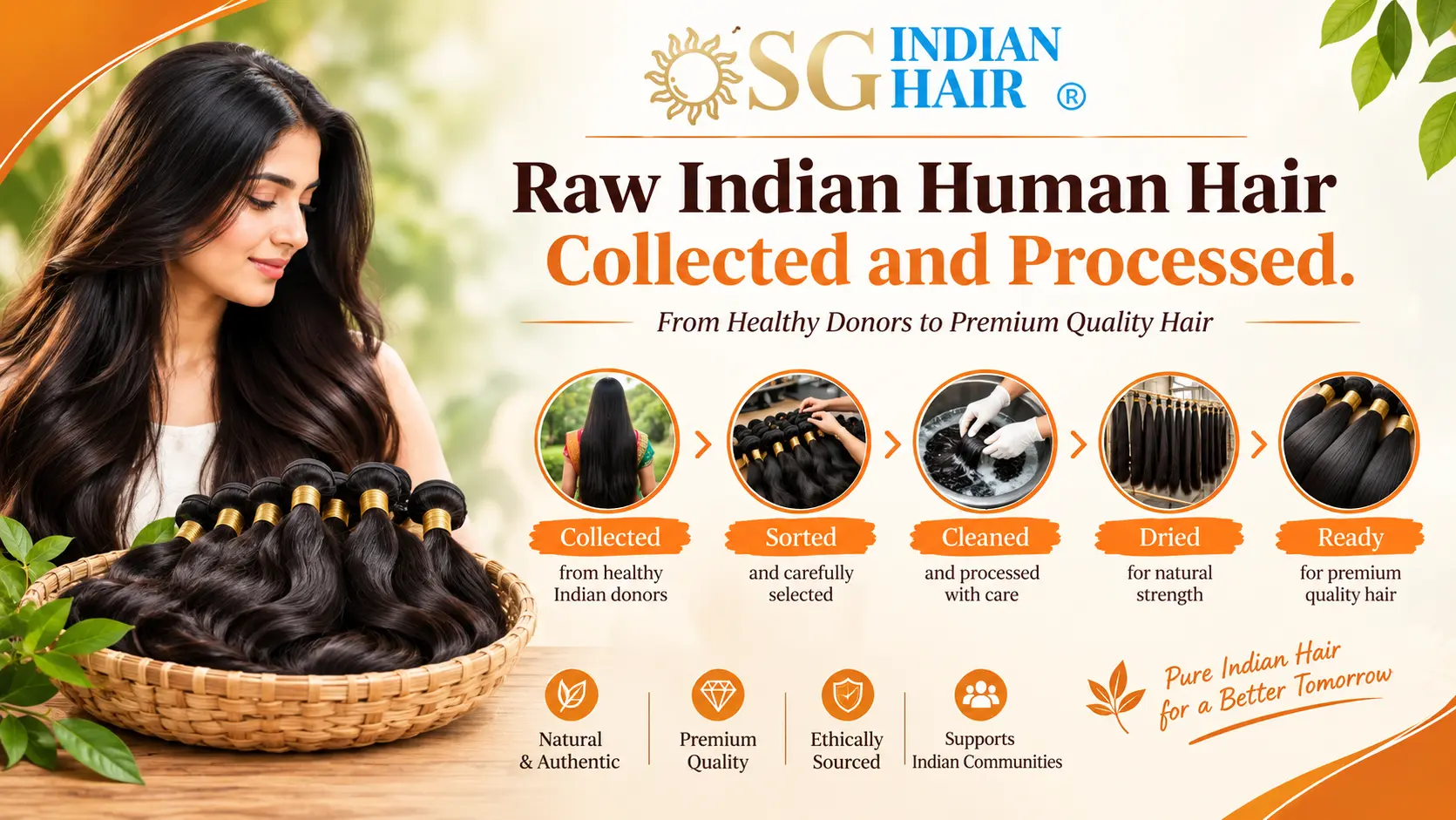
Raw Indian human hair processing is an important part of turning naturally collected hair into high-quality hair extensions, wigs, and other hair products. From the moment hair is collected to the final quality check, every step matters. Proper handling helps maintain the hair's natural strength, texture, and appearance, making it suitable for different customer needs.
India is known for its diverse human hair supply, including straight, wavy, and curly textures. Buyers from the USA, UK, Europe, Africa, and other markets look for Indian human hair because of its natural appearance and versatility. However, the quality of the finished product depends on more than the hair itself. Careful collection, cleaning, sorting, and processing also play a major role.
If you are a salon owner, hair extension retailer, or wholesale buyer, understanding how this process works can help you make better purchasing decisions. Let's explore how raw Indian hair moves from collection to finished extensions.
For businesses in the United States looking to source quality Indian human hair, choosing a reliable supplier is an important step. Buyers should consider hair quality, product variety, consistency, and communication when evaluating potential vendors.
You can also explore our Raw Indian Human Hair Vendor for USA Buyers to learn more about sourcing options and finding suitable hair products for your business needs.
What Is Raw Indian Human Hair?
Raw Indian human hair refers to human hair collected before extensive chemical processing or texture alteration. Depending on its source and handling, it may retain its natural color, texture, and cuticle structure.
Raw hair can come in different lengths, shades, and patterns. Some bundles contain naturally straight strands, while others have waves or curls. These natural differences make Indian hair suitable for a wide range of hair extensions and wig products.
However, raw hair is not always ready to use immediately after collection. It may contain dust, loose strands, tangles, or hair of different lengths. This is why manufacturers follow a careful process to prepare the material for further use.
Step 1: Understanding the Indian Human Hair Collection Process
The Indian human hair collection process begins with gathering hair from different sources. Depending on the supplier, hair may be collected through temple donations, individual hair sellers, or other legitimate collection channels.
In temple collections, people voluntarily donate their hair as part of religious practices. The collected hair may then be sold through authorized channels and supplied to manufacturers. Hair can also be purchased from individuals or local collectors who gather it through personal transactions.
Responsible sourcing is important at this stage. Manufacturers and suppliers should understand where their hair comes from and maintain clear purchasing records wherever possible.
For businesses in the UK hair industry, finding a dependable supplier is an important part of sourcing Indian human hair. Wholesale buyers, salon owners, and hair extension retailers should consider product quality, available textures, consistency, and supplier communication when choosing a vendor.
If you are looking for sourcing options, explore our Raw Indian Human Hair Vendor for UK Buyers to browse available hair products and find options that suit your business requirements.
Choosing suitable products from a reliable supplier can help businesses meet customer expectations and maintain consistent product offerings.
Why Does the Collection Method Matter?
The way hair is collected can affect its condition and how easily it can be processed. For example, hair that is tied securely before cutting is often easier to keep aligned than loose, mixed hair.
Keeping strands together in their natural direction also helps manufacturers reduce tangling during later stages. When buyers ask about sourcing, they should look for suppliers who can explain their collection methods and quality checks.
Step 2: Initial Inspection and Raw Indian Hair Preparation
After collection, the hair is inspected before it moves to the next stage. Workers examine its length, texture, color, and general condition. They also check for excessive tangling, damaged strands, and unwanted material.
This stage of raw Indian hair preparation helps manufacturers decide how the hair should be handled. Hair with similar characteristics can be grouped together, while material that needs additional attention can be separated.
For example, a batch containing long, naturally straight hair may be prepared differently from a batch containing shorter, wavy strands. Separating these groups early makes the remaining work easier and helps maintain consistency.
Manufacturers may also remove obvious foreign material and loose strands during the initial inspection. The goal is to prepare the hair for cleaning and sorting without causing unnecessary damage.
Step 3: How Raw Indian Human Hair Is Cleaned and Sorted
Cleaning and sorting are essential stages in raw Indian human hair processing. Collected hair may contain dust, loose fibers, and other unwanted material, so manufacturers need to prepare it carefully before making finished products.
Cleaning the Hair
The cleaning process depends on the condition of the hair and the method used by the manufacturer. Before the hair is prepared for further processing, it may be gently washed with suitable cleaning products to remove dirt, excess oil, sweat, and any remaining residue. Proper cleaning helps keep the strands fresh and ready for the next stage.
After washing, the hair is carefully rinsed to remove any leftover cleaning product. It is then dried under controlled conditions to help maintain its natural texture and quality. Using too much heat, handling the strands roughly, or choosing unsuitable cleaning products can lead to dryness, tangling, and breakage. For this reason, the hair needs to be handled with care throughout the cleaning process.
It is also important to understand that cleaning does not automatically mean the hair has been chemically treated or permanently altered. Washing is a basic preparation step that helps remove unwanted dirt and residue. Any additional treatment depends on the type of hair being processed and the final product the manufacturer wants to produce. This careful approach helps prepare the hair for sorting, grading, and other stages of human hair manufacturing.
Sorting by Length, Texture, and Color
Once the hair is clean and dry, workers sort it into different groups. Common sorting factors include:
Length: Hair is separated into suitable length categories for different products.
Texture: Naturally straight, wavy, and curly hair may be grouped separately.
Color: Hair can be sorted by its natural shade before any optional coloring process.
Condition: Strong, healthy strands are assessed separately from hair with visible damage.
Direction: Where possible, strands are aligned to keep the roots and ends in the correct direction.
Sorting helps manufacturers produce more consistent bundles. It also makes it easier to select hair for particular orders, whether a buyer needs natural straight hair, loose waves, or another texture.
Step 4: The Raw Indian Hair Manufacturing Process
The Raw Indian Hair Manufacturing Process includes the steps needed to turn prepared hair into a product that meets specific customer requirements. The exact method varies by manufacturer and by the type of extension being produced.
After cleaning and sorting, the hair may be detangled, aligned, and separated into manageable sections. Workers then check whether the strands are suitable for the intended product.
Some hair is kept close to its natural state, while other hair may undergo additional processing. Depending on the order, manufacturers may use controlled coloring, texture treatments, or other finishing methods.
It is important to understand that not every raw hair product follows the same route. Some products are marketed as raw hair because they undergo minimal processing, while other products sold under broader Indian human hair categories may receive more extensive treatment.
Buyers should ask manufacturers which processes are used rather than assuming that all hair described as Indian human hair is handled identically.
Step 5: From Raw Indian Hair to Finished Hair Extensions
The journey from raw Indian hair to finished hair extensions depends on the final product design. Once the hair is prepared and approved, it can be assembled into bundles, wefts, wigs, or other extension styles.
For businesses looking for reliable sourcing options, choosing experienced Raw Indian Human Hair Suppliers in India can help them explore different hair products for their target markets. Buyers should consider product quality, available styles, and whether the products match their customers' needs.
For machine-made wefts, hair is arranged and secured along a stitched track. For hand-tied products, skilled workers carefully attach small sections of hair to a suitable base. Other products, such as tape-in or fusion extensions, require different preparation and attachment methods.
Manufacturers may also prepare hair for lace wigs, closures, frontals, and other custom products. The required length, density, texture, and color depend on the buyer's specifications.
For example, a retailer ordering straight hair bundles for customers who prefer a natural everyday look may need a different selection from a wig maker producing a curly lace wig. Matching the raw material to the final design helps achieve a more suitable result.
Step 6: Quality Control Before Packaging
Quality control is one of the final steps before the hair is packed and prepared for shipment. Even when the earlier stages have been completed carefully, the finished product needs another inspection.
Manufacturers may check the following points:
Length accuracy: Whether the hair meets the requested length.
Texture consistency: Whether the strands match the ordered texture.
Appearance: Whether the hair looks clean and presentable.
Tangling and shedding: Whether there are obvious problems with the finished product.
Bundle weight: Whether the product meets the agreed weight specifications.
Order requirements: Whether the hair matches the buyer's requested color, style, and construction.
Quality checks can vary between manufacturers, so buyers should ask how the supplier evaluates finished products. Clear specifications and sample approvals can also help reduce misunderstandings when placing large orders.
Why Processing Quality Matters for Indian Human Hair Wholesale
For businesses involved in Indian Human Hair Wholesale, consistent processing is essential. A retailer may receive orders from customers who expect the same texture, length, and general appearance each time they purchase a product.
If a supplier does not sort or inspect hair properly, the final bundles may vary more than expected. This can lead to customer complaints, returns, and additional costs for the buyer.
Wholesale buyers should ask about sourcing, cleaning methods, available textures, length options, minimum order quantities, packaging, and quality control. It is also helpful to request samples before placing a large order.
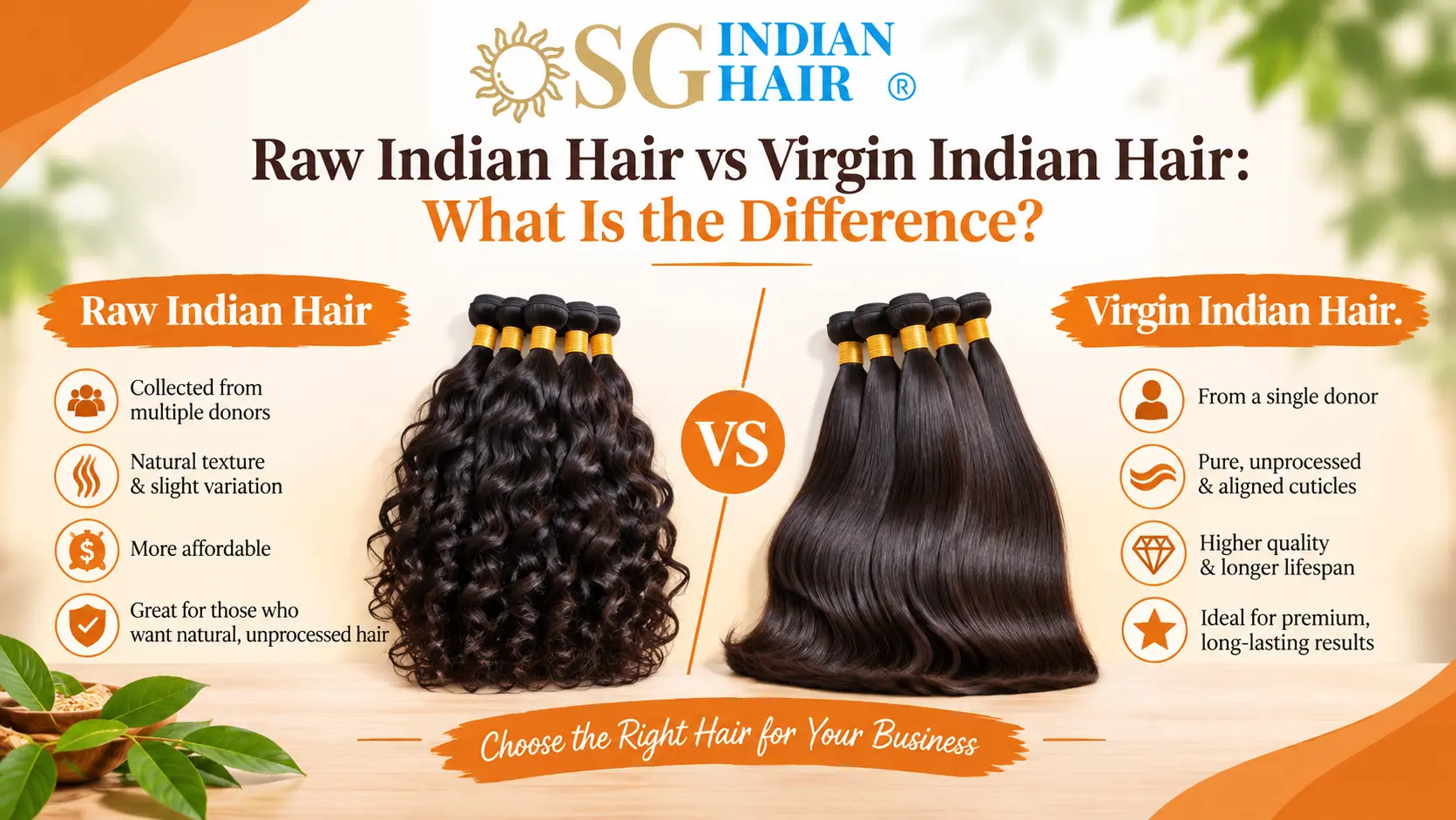
A reliable supplier should explain what the product includes and whether the hair has undergone coloring, bleaching, steaming, or other treatments. Buyers should also clarify whether terms such as raw, virgin, and Remy are being used accurately, since these terms describe different product characteristics and are not automatically interchangeable.
When sourcing hair in bulk, choosing a supplier with suitable product options and clear quality standards can help businesses manage their inventory and meet customer expectations. Comparing available products, checking specifications, and understanding order requirements are useful steps before making a wholesale purchase.
If you are researching the best raw Indian human hair vendors in India, explore our bulk human hair collection to review available options for your business. This can help salon owners, retailers, and distributors identify products that match their requirements.
Before placing a large order, confirm product details, pricing, minimum order quantities, and quality control procedures directly with the supplier.
How to Choose a Reliable Indian Human Hair Manufacturer
Choosing the right manufacturer involves more than comparing prices. A good supplier should communicate clearly, explain the production process, and provide details about the products being offered.
Before ordering, consider these practical steps:
Ask about sourcing: Find out how the hair is collected and whether the supplier can explain its sourcing practices.
Request samples: Check the texture, length, appearance, and general condition before buying in bulk.
Confirm processing details: Ask whether the hair is minimally processed or has received additional treatments.
Discuss product specifications: Confirm the available lengths, textures, colors, bundle weights, and extension types.
Review quality procedures: Learn how the manufacturer checks finished products before shipment.
Confirm commercial terms: Discuss minimum order quantities, production timelines, packaging, shipping, and payment terms.
These steps help wholesale buyers compare suppliers more effectively and choose products that suit their customers.
Conclusion
Raw Indian human hair processing involves several important stages, from collection and initial inspection to cleaning, sorting, manufacturing, and final quality checks. Each stage contributes to the appearance, consistency, and usability of the finished hair product.
For retailers, salon owners, wig makers, and wholesale buyers, understanding this journey makes it easier to ask the right questions and evaluate suppliers. By focusing on responsible sourcing, careful preparation, clear product specifications, and consistent quality control, businesses can make more informed decisions when purchasing Indian human hair.
The most suitable supplier is one that explains its process honestly, understands your requirements, and works to deliver products that match the agreed specifications.
Frequently Asked Questions
1. What is involved in raw Indian human hair processing?
Raw Indian human hair processing includes inspecting collected hair, removing unwanted material, cleaning, drying, sorting, and preparing the strands for use in bundles, wigs, or other hair extensions. Additional treatments depend on the final product.
2. How does the Indian Human Hair Collection Process work?
The Indian Human Hair Collection Process may involve temple donations, individual sellers, and local collectors. The hair is gathered, secured, and supplied to manufacturers for inspection and preparation.
3. Why is Raw Indian Hair Preparation important?
Raw Indian Hair Preparation helps separate hair by length, texture, color, and condition. Proper preparation makes it easier to manufacture consistent bundles and extensions for different customer needs.
4. How is raw Indian human hair cleaned and sorted?
Raw Indian human hair is cleaned and sorted by removing dirt and unwanted material, washing when appropriate, drying carefully, and grouping strands according to length, texture, color, and condition. The exact method varies by manufacturer.
5. What should buyers check before ordering Indian Human Hair Wholesale?
Before ordering Indian Human Hair Wholesale, buyers should check samples, available lengths and textures, sourcing information, processing methods, quality standards, minimum order quantities, and shipping terms. These details help them choose products that meet their business requirements.




.jpg)
.jpg)