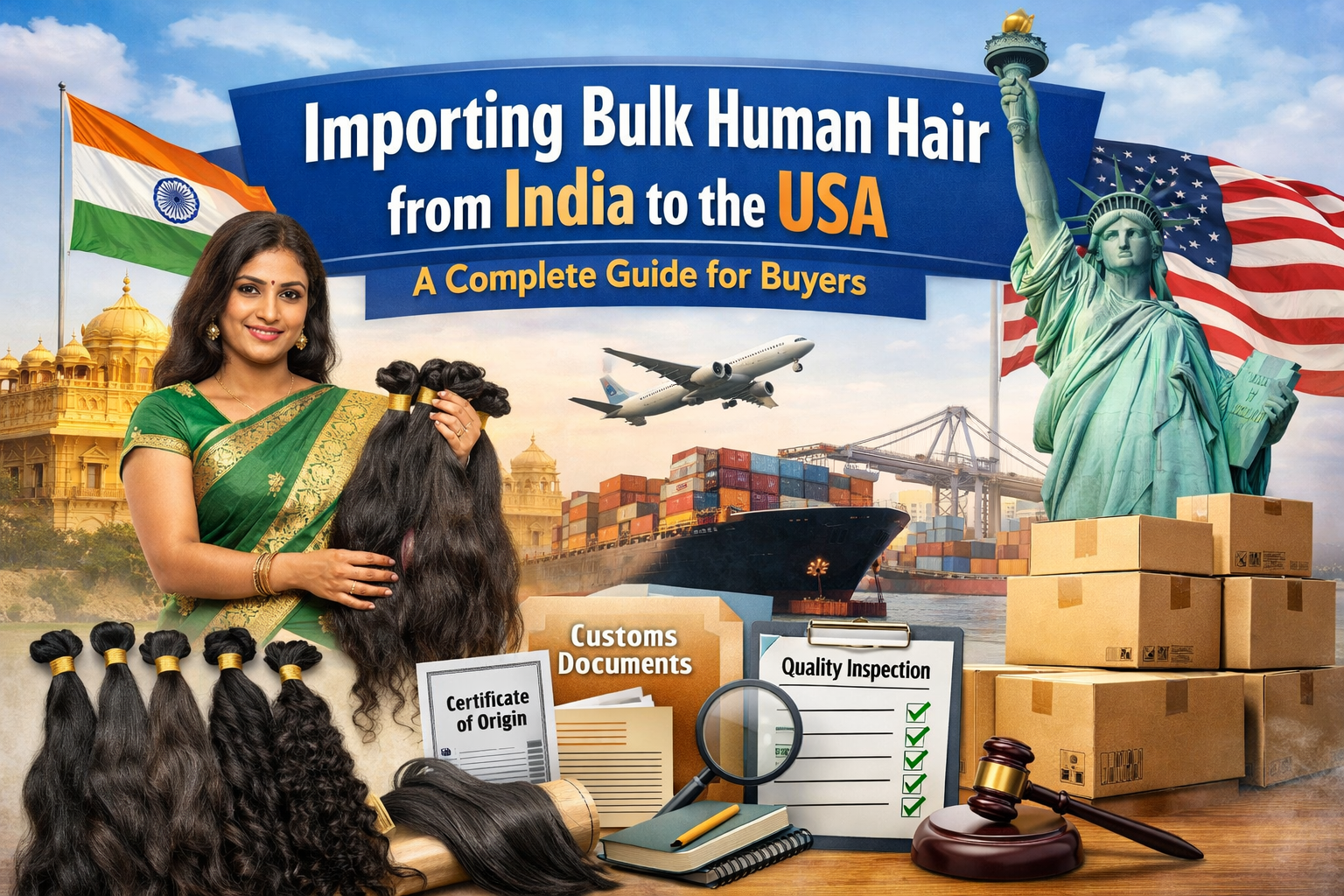
Importing human hair from India can be a valuable opportunity for salon owners, beauty supply stores, wig brands, and hair extension businesses in the United States. However, successful importing involves more than finding a supplier and placing an order. Buyers must evaluate hair quality, confirm sourcing practices, understand shipping costs, prepare the required documents, and plan for customs clearance.
India is an important source of human hair for the global beauty industry. Working with a reliable Indian Human Hair Manufacturer and following a well-planned purchasing process can help US businesses build a dependable supply chain and serve customers with different hair needs.
This guide explains the key steps involved in importing bulk human hair from India to the USA, from choosing a supplier to receiving and checking your shipment.
Why Buy Bulk Human Hair from India?
Indian human hair is widely used in hair extensions, wigs, closures, and other beauty products. Buyers may find different lengths, textures, grades, and processing options depending on the supplier and available stock.
One advantage of sourcing from India is the range of products available for wholesale purchasing. Businesses can explore raw hair, processed hair, loose hair bundles, and finished products based on their target market.
Some hair is collected through temple donations, while other hair may come from different collection channels. Therefore, buyers should ask suppliers about the actual origin of their products instead of assuming that all Indian hair is temple-sourced or collected in the same way.
Before placing a large order, compare suppliers based on product consistency, transparent sourcing information, quality checks, communication, and export experience.
Step 1: Understand the Types of Human Hair Available
Before importing, understand the product specifications that match your customers' expectations. Terms such as raw, virgin, and processed hair can vary between suppliers, so ask for clear definitions.
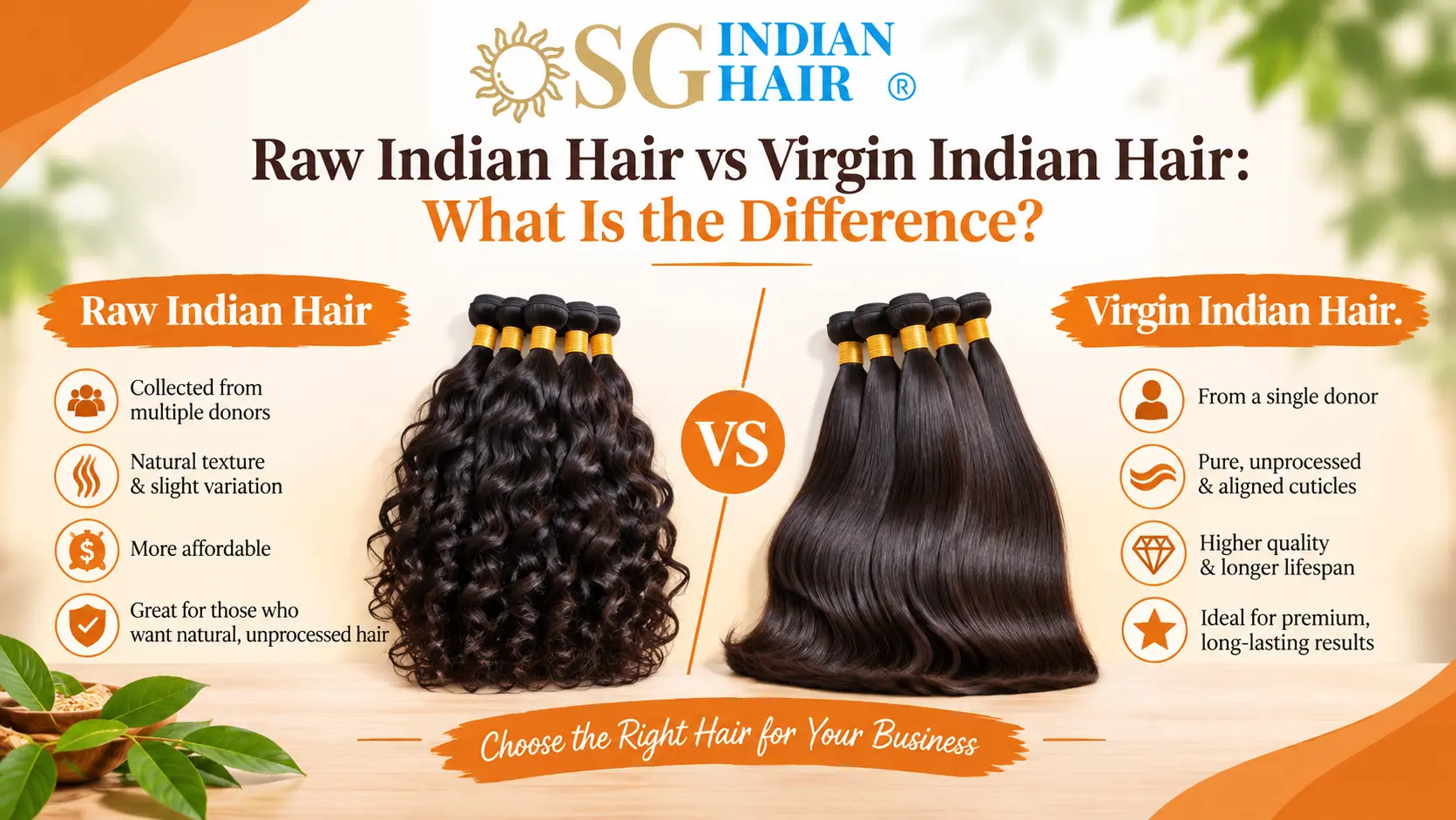
Raw Human Hair
Raw human hair is generally marketed as hair that has undergone minimal processing. However, the exact preparation methods can vary. Ask the supplier whether the hair has been chemically treated, dyed, steamed, or otherwise altered.
Businesses looking for loose hair bundles can explore bulk human hair for wholesale buyers and compare the available options before selecting a product.
Virgin Human Hair
Virgin hair is commonly described as hair that has not undergone chemical treatments such as bleaching or dyeing. However, some suppliers use the term differently. Confirm the product's treatment history and request written specifications before ordering.
Processed Human Hair
Processed hair may be dyed, bleached, steam-curled, straightened, or treated to achieve a particular colour or texture. It can suit businesses that need specific styles or consistent product appearances.
Single-Drawn and Double-Drawn Hair
Single-drawn hair generally contains strands of different lengths, creating a more natural-looking distribution. Double-drawn hair is sorted to provide a higher proportion of strands at a similar length, resulting in fuller-looking ends.
Always request product photographs, specifications, and samples to verify that the supplied hair matches your requirements.
Step 2: Find a Reliable Indian Hair Supplier
Choosing a supplier is one of the most important decisions when importing bulk human hair. A low price may look attractive, but inconsistent quality, unclear product descriptions, and communication problems can increase your overall costs.
Evaluate potential suppliers using the following checks:
Product specifications: Confirm the hair type, length, texture, colour, weight, and processing method.
Sample availability: Request a sample before committing to a large shipment.
Quality control: Ask how the supplier checks shedding, tangling, texture consistency, and length.
Sourcing transparency: Request information about the hair's origin and collection practices.
Export experience: Confirm whether the supplier has experience preparing commercial shipments for international buyers.
Wholesale terms: Clarify minimum order quantities, payment terms, production time, and replacement policies.
Ask for a written quotation and make sure the product specifications are recorded on the order confirmation. Video calls and factory tours may also help you understand the supplier's operations, although they should not replace independent verification where necessary.
If you are comparing sourcing options, you can visit SG Indian Hair to explore its available hair products and wholesale offerings.
Step 3: Verify Hair Quality and Ethical Sourcing
A supplier's description alone is not enough to establish product quality. Hair that looks similar in photographs may perform differently after washing, styling, or installation.
Request a sample and assess it using the same checks you would apply to a commercial order. Depending on the product, these may include:
Checking whether the stated length and weight match the sample.
Inspecting the texture, colour, and consistency of the strands.
Washing and conditioning the hair to observe how it responds.
Checking for excessive shedding and tangling.
Testing whether the texture remains consistent after drying and styling.
Also ask how the supplier obtains the hair and what documentation supports its sourcing claims. If ethical sourcing is important to your brand, request relevant records and explain your requirements before confirming the order.
For higher-value purchases, consider arranging an independent pre-shipment inspection in India. This can help identify discrepancies before the goods leave the supplier's premises.
Step 4: Understand US Import Requirements
Importers must ensure that their products comply with applicable US customs requirements. Before shipping, confirm the correct product description, customs classification, declared value, country of origin, and any requirements that apply to the specific goods.
Depending on the shipment and transaction, commonly relevant paperwork may include:
Commercial invoice: Describes the goods, quantities, values, seller, and buyer.
Packing list: Shows the package contents, quantities, and weights.
Air waybill or bill of lading: Records the shipment and transport details.
Country-of-origin information: Supports accurate origin declarations and applicable marking requirements.
Customs entry documents: Additional information or filings may be required for clearance.
A certificate of origin is not automatically required for every shipment. Confirm whether it is necessary for your particular transaction and destination.
Do not assume that every human hair product has identical customs treatment. Classification and duty rates depend on the product's characteristics and applicable tariff rules. Check the current requirements with US Customs and Border Protection (CBP) or a qualified customs broker before shipping.
You can consult the official raw Indian hair supplier India for information about product descriptions, classification, and customs procedures.
A customs broker can help prepare the required entry information, review documentation, and address classification questions. Hiring one is not mandatory for every import, but professional assistance can be useful for first-time buyers or larger shipments.
Step 5: Choose the Right Shipping Method
Shipping decisions depend on order size, budget, urgency, and the supplier's logistics arrangements.
Air Freight
Air freight is often suitable for smaller or time-sensitive commercial orders. It can reduce transit time, but the cost may be higher depending on shipment weight, dimensions, service level, and destination.
Sea Freight
Sea freight may be worth considering for larger shipments when the delivery schedule is flexible. It generally involves longer transit times and may require additional planning for port handling, customs clearance, and final delivery.
Courier Services
International courier services may suit samples and smaller parcels. Confirm the carrier's rules for the product, available tracking, delivery terms, and any additional charges.
Ask your supplier or freight forwarder for a written shipping estimate. Treat delivery times as estimates rather than guarantees because customs inspections, weather, carrier schedules, and documentation issues can cause delays.
Step 6: Calculate the Total Landed Cost
The supplier's quoted price is only one part of the total cost of importing human hair. To price your products accurately, calculate the expected landed cost before placing an order.
Consider the following expenses:
Product purchase price.
Domestic transport within India, where applicable.
Export packing and handling.
International freight and insurance.
Customs duties, taxes, and applicable fees.
Customs broker charges.
Port, warehouse, or storage costs.
Final delivery within the United States.
Ask the supplier which shipping terms apply and which party is responsible for each expense. Compare quotations on the same basis so you do not mistake a lower product price for a lower total cost.
Once you have calculated the expected landed cost, add your operating expenses and desired margin to establish a realistic selling price.
Step 7: Start with a Trial Order
First-time buyers should consider testing a manageable quantity before placing a large wholesale order. A trial order gives you an opportunity to evaluate the supplier's product quality, packing, documentation, communication, and delivery performance.
Keep a written record of the agreed specifications and compare the received goods with the approved sample. If the shipment does not meet the agreed requirements, document the differences and contact the supplier promptly.
After a successful trial, you can discuss larger orders, repeat-purchase schedules, product variations, and wholesale pricing. Written agreements help both parties understand their responsibilities as the business grows.
Step 8: Select Hair Textures Based on Your Customers
Different customer groups have different preferences, so your buying decisions should reflect your target market.
Straight hair may appeal to customers looking for a smooth finish and styling flexibility. Curly hair can serve customers who prefer natural-looking volume and defined curl patterns. Other buyers may look for wavy textures, specific lengths, or hair suitable for custom styling.
For businesses that work with loose bundles, bulk straight raw human hair may be worth comparing with bulk curly raw human hair.
Review the specifications and sample quality of each option before making a purchasing decision. Avoid ordering a large quantity based solely on general market trends; customer feedback and actual sales data provide a better basis for inventory planning.
Common Challenges When Importing Human Hair
Importers can face several avoidable problems, particularly when ordering from a new supplier.
Inconsistent quality: Reduce this risk by approving a sample, recording product specifications, and agreeing on quality checks before production.
Unexpected costs: Request a complete quotation and confirm who pays freight, insurance, duties, handling, and delivery charges.
Customs delays: Ensure the shipment description and supporting documents are accurate, and confirm applicable requirements before dispatch.
Unclear communication: Use written purchase orders, invoices, and agreed delivery terms rather than relying only on verbal promises.
Unverified sourcing claims: Request supporting information and independently verify important supplier claims whenever possible.
Planning for these issues before placing an order can help protect your budget and make future shipments easier to manage.
Final Thoughts
Importing bulk human hair from India to the USA requires careful supplier selection, product testing, accurate documentation, and realistic cost planning. Buyers who evaluate samples, clarify sourcing practices, and understand their shipping responsibilities are better prepared to build a dependable wholesale supply chain.
Start with clear product requirements, compare suppliers on more than price, and document every important agreement. Once your first order meets your quality and delivery expectations, use that experience to improve your purchasing process and plan future orders with greater confidence.
Frequently Asked Questions
1. Is importing human hair from India to the USA legal?
Commercial imports may be permitted when the products comply with applicable US customs requirements and any other rules that apply to the shipment. Confirm the correct classification, documentation, and entry requirements with CBP or a qualified customs broker before importing.
2. How long does shipping human hair from India to the USA take?
Delivery time depends on the shipping method, carrier, destination, customs clearance, and other factors. Air freight is generally faster than sea freight, but obtain a current estimate from your supplier or freight forwarder rather than relying on a fixed delivery timeline.
3. Do I need a customs broker to import bulk human hair?
A customs broker is not mandatory for every shipment. However, a broker can help first-time importers understand customs classification, documentation, and entry procedures.
4. Can I import a small quantity before placing a bulk order?
Yes. You can ask suppliers whether they offer samples or smaller trial orders. Confirm the minimum order quantity, sample price, shipping charges, and whether the sample reflects the specifications of the bulk product.
5. How can I avoid buying low-quality human hair?
Request a sample, verify the product specifications, test the hair, review the supplier's quality-control process, and document the agreed requirements. For larger orders, consider an independent pre-shipment inspection before the goods are dispatched.





.jpg)
.jpg)