Raw Indian Human Hair Supplier African Wholesale Buyers: Sourcing
Finding a reliable raw Indian human hair supplier Africa buyers can trust is an important step for wholesalers, salon owners, wig makers, and hair extension businesses looking to build a successful hair business. Indian human hair has attracted attention in international markets because of its natural appearance, styling flexibility, and availability in different lengths and textures. However, choosing the right supplier involves much more than comparing prices. Buyers need to understand hair quality, sourcing methods, product consistency, packaging, communication, and international shipping before placing a wholesale order.
For African hair businesses, selecting the right sourcing partner can make a significant difference to customer satisfaction and long-term business growth. Whether you sell wigs, make custom hairpieces, operate a beauty salon, or distribute hair products to retailers, understanding how the Indian hair market works can help you make informed purchasing decisions.
This guide explains what wholesale buyers should know before sourcing Indian human hair, how to evaluate suppliers, what questions to ask, and how to manage the purchasing process from India to Africa.
Why African Wholesale Buyers Consider Indian Human Hair
Indian human hair is used in several hair extension and wig applications. Its natural appearance and versatility make it a product worth exploring for businesses serving customers with different styling preferences.
One reason buyers explore Indian hair is the variety of products available. Depending on the supplier and collection, wholesalers may find straight, wavy, curly, and other texture options. Different lengths and bundle weights also allow businesses to create products for different customer requirements.
Another consideration is the range of processing options. Raw hair is generally valued because it has undergone less chemical processing than heavily treated hair. However, the term raw should not be accepted without asking the supplier about the actual collection and processing methods.
For a business importing hair products, consistency is just as important as appearance. Customers expect the hair they purchase today to be comparable to what they bought previously. This makes supplier evaluation an essential part of wholesale sourcing.
For African hair businesses, choosing a dependable Indian human hair supplier can help maintain product quality and meet customer expectations. Wholesale buyers should consider hair texture, product availability, quality standards, and bulk purchasing options before selecting a supplier.
If you are looking for wholesale sourcing options, explore our Raw Indian Human Hair Supplier for Africa to browse bulk human hair products suitable for salons, retailers, and hair extension businesses.
Working with a consistent supplier can help your business maintain reliable stock and offer customers quality hair products.
Understanding Raw Indian Human Hair Before Buying
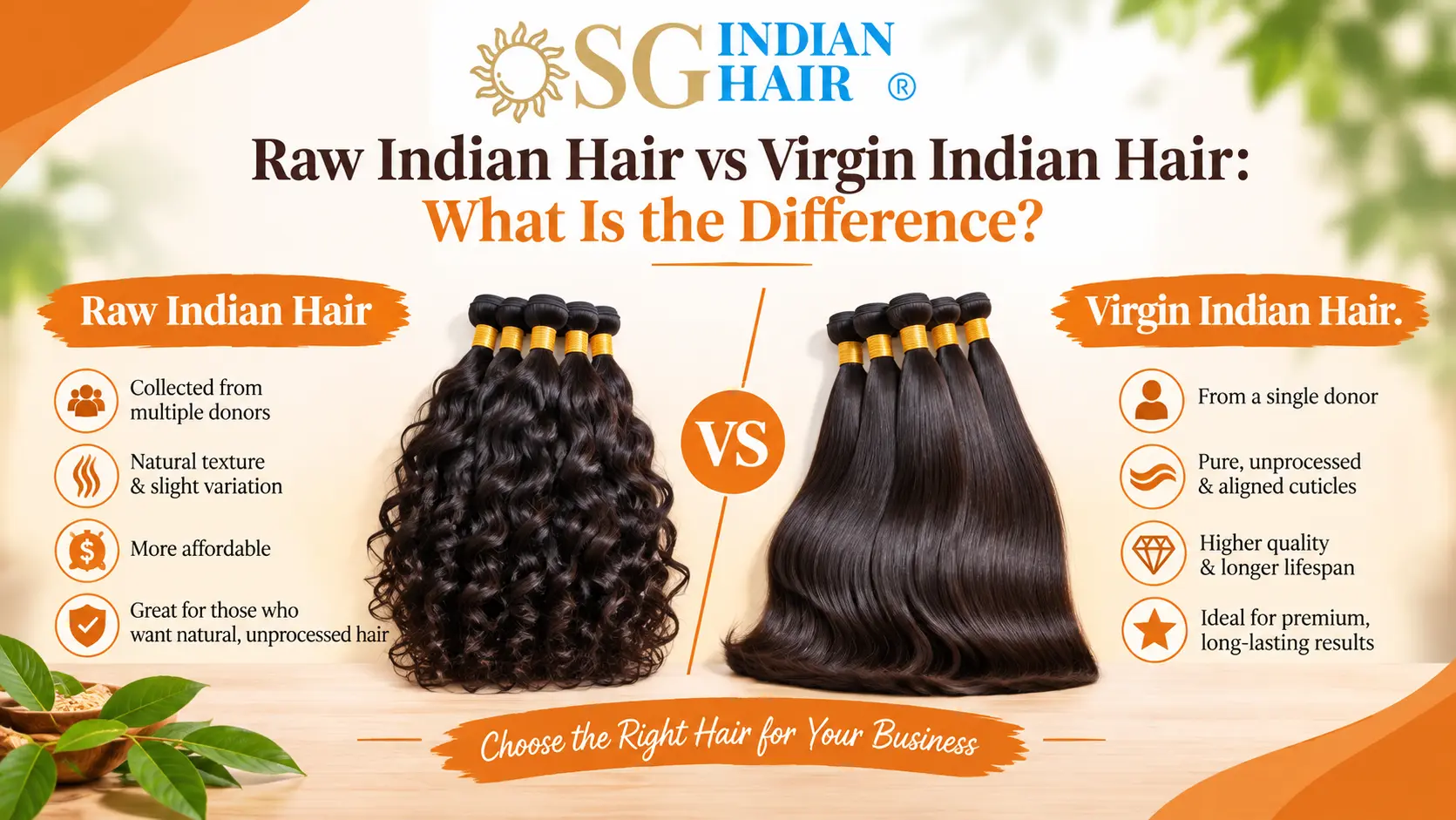
Before contacting a supplier, it is useful to understand what raw Indian human hair means. Raw hair is commonly described as hair that has not undergone extensive chemical processing, such as strong colouring, permanent texturising, or similar treatments.
However, product descriptions can differ between sellers. Some suppliers may use the word raw for hair that has received basic cleaning or preparation, while others may describe more extensively processed products using the same term.
Wholesale buyers should therefore ask for clear product information rather than relying only on labels.
Important details to confirm include:
Whether the hair is chemically processed or naturally collected.
Whether the cuticles are aligned.
How the hair is cleaned and prepared.
Whether the texture is natural or altered.
Whether the product has been dyed or treated.
Whether the sample represents the actual bulk order.
These questions help buyers understand what they are purchasing and reduce the possibility of receiving a product that does not match their expectations.
How to Choose a Raw Indian Human Hair Supplier Africa Buyers Can Trust
Choosing a raw Indian human hair supplier Africa businesses can work with requires careful evaluation. A supplier may have attractive product photographs and competitive quotations, but these details alone do not establish product quality or reliability.
Start by checking the supplier's product range. A professional wholesale supplier should be able to explain available lengths, textures, bundle weights, and product variations. Clear information makes it easier to compare quotations from different sellers.
Next, ask for recent product photographs and videos. Request close-up views of the hair, including its ends, texture, and overall appearance. If possible, order a sample before committing to a large quantity. A physical sample allows you to assess the product more accurately than photographs alone.
Communication is another important factor. Notice how clearly the supplier answers questions about quality, order quantities, payment terms, packaging, and dispatch. A dependable business relationship requires transparent communication throughout the buying process.
You should also discuss how the supplier handles complaints or differences between samples and bulk orders. Having these details agreed upon before payment can help prevent misunderstandings later.
For African salon owners, hair extension retailers, and wholesale buyers, choosing the right Indian human hair supplier is equally important. Before placing a bulk order, it is worth checking product types, hair textures, quality standards, and available options to ensure they match your customers' requirements.
If you are exploring reliable sourcing options, visit our Raw Indian Human Hair Vendor for Africa page to explore curly raw hair lace closure products suitable for different hairstyling needs.
Reviewing product details and discussing your requirements with the supplier can help you make a more informed purchasing decision.
What Makes a Wholesale Hair Supplier Suitable for African Markets?
African wholesale buyers may serve different customer groups, including wig manufacturers, beauty salons, independent stylists, retailers, and online hair businesses. Each group may have different product requirements.
For example, a wig manufacturer may prioritise consistent hair quality and suitable bundle quantities. A salon may need several textures and lengths to serve individual customers. A distributor may focus more on regular availability, packaging, and repeat-order arrangements.
A suitable supplier should understand these different requirements and explain which products are available for wholesale purchasing.
When comparing suppliers, consider the following factors:
Product consistency: Ask whether repeat orders can be supplied with similar characteristics to the original sample.
Available selection: Check whether the supplier offers the textures, lengths, and weights your customers regularly request.
Order flexibility: Understand the minimum order quantity and whether mixed products can be included in one order.
Communication: Choose a business that provides clear responses and written order details.
Packaging: Confirm how the hair will be packed to protect it during international transportation.
Documentation: Discuss the commercial invoice, packing list, and other documents required for your shipment.
When comparing suppliers, it is also useful to explore their available hair products and understand the differences in hair quality and construction. Choosing the right product category can help you match your business requirements and customer preferences.
You can explore raw Indian hair suppliers in India to browse single-drawn hair products and understand the available options for wholesale purchasing.
These details help you evaluate a supplier beyond the initial quotation.
Raw Indian Human Hair Wholesale Africa: Understanding Product Selection
Businesses exploring Raw Indian Human Hair Wholesale Africa options should begin by understanding which products are suitable for their target customers.
The wholesale market includes different hair textures, lengths, and product formats. Straight hair is often considered for sleek hairstyles, while wavy and curly textures offer different styling possibilities. The right selection depends on customer preferences, local demand, and the type of business you operate.
Bundle weight is another important detail. Suppliers may offer different weights and lengths, so buyers should confirm the specifications before ordering. Do not assume that two bundles with similar photographs contain the same quantity of hair.
It is also useful to understand the difference between bundles, closures, frontals, and finished wigs. These products serve different purposes and may have different pricing structures.
Before finalising an order, prepare a product list with the required texture, length, quantity, and specifications. Share the same list with every supplier you are comparing. This makes quotations easier to evaluate and helps you avoid comparing products that are not identical.
How to Evaluate Hair Quality Before Placing a Bulk Order
Hair quality should be checked through more than one factor. A product that looks smooth in a photograph may not perform in the same way after washing, drying, or styling.
If a supplier offers samples, examine the hair carefully. Look at its texture, overall condition, thickness, and ends. Ask the supplier whether the sample has been washed or treated before dispatch.
You can also ask for information about tangling and shedding, but remember that these terms should be supported by clear product specifications rather than broad promises.
A practical evaluation process includes:
Request a sample in the texture and length you intend to purchase.
Compare the sample with the supplier's written description.
Check whether the hair feels and looks consistent throughout.
Ask about washing, drying, and styling recommendations.
Record your observations before approving the bulk order.
Avoid placing a large order based only on a supplier's promotional claims. A sample evaluation gives you a better basis for making a purchasing decision.
Best raw Indian hair suppliers for Africa buyers: What Should You Compare?
When researching the Best Reliable Raw Indian Hair Suppliers for Africa Buyers, it is important to compare businesses using consistent criteria instead of choosing the first seller that responds.
Start with product transparency. Suppliers should be able to explain what they mean by raw hair and provide information about their preparation process. If the description is unclear, ask follow-up questions before making a payment.
Next, compare product specifications. Check whether the quoted price includes the same hair length, weight, texture, and quality description. A lower quotation may not represent better value if the product specifications are different.
Look at order terms as well. Minimum quantities, payment schedules, production timelines, packaging costs, and shipping charges can all affect the final purchasing cost.
You should also consider the supplier's ability to handle repeat orders. If your business depends on regular stock, ask how availability is managed and how much advance notice is needed for larger requirements.
A comparison sheet can make the process easier. Record the supplier's quotation, sample observations, product specifications, estimated dispatch time, and communication quality. This gives you a clearer picture before making a decision.
Indian Hair Extensions Wholesale Africa: Understanding Market Requirements
Businesses exploring Indian Human Hair Extensions Wholesale Africa should understand that customers may have different expectations depending on their location, styling habits, and budget.
Some customers may prefer natural-looking straight extensions, while others may look for curly or wavy textures. Length preferences and the type of finished hairstyle can also influence purchasing decisions.
For wholesalers, it is useful to study the products that generate regular enquiries. Speak with salon owners, stylists, retailers, and existing customers to understand which textures and lengths they request most frequently.
Closures and frontals may also be relevant for businesses selling complete wig-making supplies. However, these products should be evaluated separately from standard bundles because their construction and specifications differ.
A balanced product range can help a business serve different customer groups without investing too heavily in slow-moving stock. Start with products that match clear customer demand and expand the selection as you understand the market better.
Raw Indian Hair Bundles Wholesale Africa: What Buyers Should Know
When purchasing Raw Indian Hair Bundles Supplier Wholesale Africa, buyers should pay close attention to the specifications of each bundle.
Length, weight, texture, and hair preparation can influence the final product. Ask the supplier how the length is measured and whether the stated weight applies to each individual bundle.
It is also important to understand whether the bundles are single-drawn, double-drawn, or supplied under another product description. These terms relate to the distribution of hair lengths within a bundle, so buyers should ask for an explanation and supporting product images.
For repeat orders, maintain a record of the specifications you approved. This can include sample photographs, product details, quantity, and agreed pricing. Written records make it easier to communicate your requirements when ordering again.
If you sell bundles through a retail store or online platform, accurate product descriptions are equally important. Customers should know what they are purchasing, including the length, weight, texture, and any processing information provided by the supplier.
Shipping Raw Indian Hair from India to the Africa
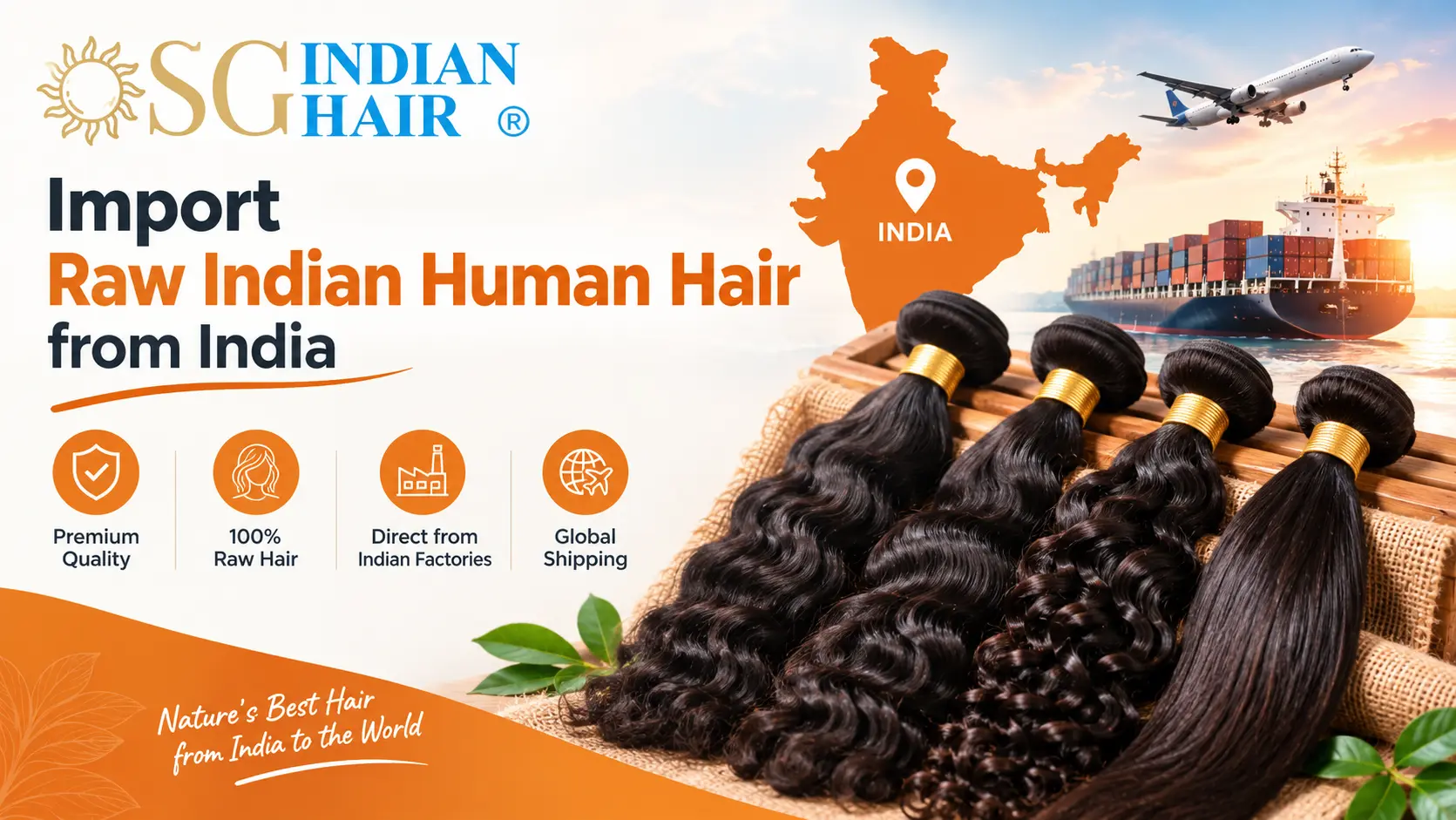
Understanding Shipping Raw Indian Hair from India to the Africa is an important part of planning a wholesale purchase. International shipping involves more than selecting a courier. Buyers should confirm the delivery arrangements, documents, charges, and estimated transit time before placing an order.
Start by discussing the destination country and delivery address with the supplier. Shipping requirements may vary depending on the country, so the supplier or freight forwarder should confirm the applicable arrangements.
Ask whether the quotation includes shipping or whether transportation will be charged separately. You should also clarify who is responsible for customs clearance and any duties or taxes that may apply.
Common documents to discuss include:
Commercial invoice.
Packing list.
Shipment tracking details.
Applicable customs documentation.
Any additional documents required by the destination country.
Confirm the packaging method as well. Hair products should be packed securely to reduce the risk of damage, moisture exposure, or handling issues during transit.
Before payment, ask for an estimated dispatch date and a realistic delivery window. Remember that customs procedures and transportation conditions can affect the final delivery date.
Common Mistakes to Avoid When Sourcing Hair Wholesale
New wholesale buyers sometimes focus mainly on the quoted price. While cost is important, choosing a supplier without checking the product can create problems later.
One common mistake is ordering a large quantity without reviewing a sample. Product photographs may not show every detail, so physical evaluation is preferable whenever possible.
Another mistake is ignoring product specifications. If the supplier and buyer have different understandings of length, weight, texture, or processing, the delivered order may not meet expectations.
Buyers should also avoid relying entirely on verbal promises. Keep important details in writing, including product descriptions, quantities, payment terms, dispatch timelines, and agreed arrangements for resolving order issues.
Finally, do not overlook the total landed cost. The product price is only one part of the purchase. Shipping, customs duties, taxes, and other applicable charges may affect the final cost of importing hair products.
Building a Long-Term Relationship with an Indian Hair Supplier
A reliable sourcing relationship develops through clear communication and consistent expectations. Once you identify a supplier whose products meet your requirements, maintain records of each order and share feedback after receiving the shipment.
If you notice a difference between the approved sample and the delivered products, document the issue with photographs and written details. Clear communication gives both parties an opportunity to understand the problem.
For regular wholesale purchases, discuss stock availability and order planning in advance. This can help your business prepare for seasonal demand and reduce last-minute sourcing difficulties.
A long-term relationship should benefit both the buyer and supplier. Buyers need dependable product information and clear order terms, while suppliers need accurate requirements and realistic purchasing expectations.
Conclusion
Choosing the right raw Indian human hair supplier Africa businesses can depend on involves research, product evaluation, and careful communication. Buyers should understand the difference between raw and processed hair, compare product specifications, request samples, and review shipping arrangements before confirming an order.
The most suitable supplier is not necessarily the one offering the lowest quotation. It is the business that provides clear product information, consistent communication, transparent order terms, and products that match your customers' expectations.
By following a structured sourcing process, African wholesalers can make more informed purchasing decisions, manage import requirements, and develop stronger relationships with Indian hair suppliers over time.
Frequently Asked Questions
1. What should I check before choosing a Raw Indian hair supplier Africa?
Before selecting a Raw Indian hair supplier Africa, check product specifications, sample quality, available textures, minimum order quantities, payment terms, and shipping arrangements. Ask for written details before confirming a bulk order.
2. Is Raw Indian Human Hair Wholesale Supplier Africa suitable for small businesses?
Raw Indian Human Hair Wholesale Supplier Africa can be considered by small retailers, salon owners, wig makers, and distributors. The suitability depends on the supplier's minimum order quantity, product selection, and your customers' requirements.
3. How can I identify the Best raw Indian hair suppliers for Africa buyers?
The Best Reliable Raw Indian Hair Suppliers for Africa Buyers should provide clear product descriptions, samples, transparent quotations, and understandable order terms. Compare multiple suppliers before making a purchasing decision.
4. What products are included in Indian hair extensions wholesale Africa?
Indian Human Hair Extensions Wholesale Africa may include bundles, closures, frontals, and other extension products, depending on the supplier. Always confirm the exact product type, length, weight, and texture before ordering.
5. What should I confirm when ordering Raw Indian hair bundles wholesale Africa?
When ordering Raw Indian Hair Bundles Supplier Wholesale Africa, confirm the bundle weight, length, texture, hair preparation, quantity, and packaging. Request a sample if possible so you can evaluate the product before placing a larger order.
6. What documents are needed for Shipping Raw Indian Hair Products from India to Africa?
For Shipping Raw Indian Hair Products from India to Africa, buyers should discuss the commercial invoice, packing list, shipment details, and destination-specific customs requirements with the supplier or freight forwarder.