Indian Temple Hair vs Non-Temple Raw Hair Key Differences
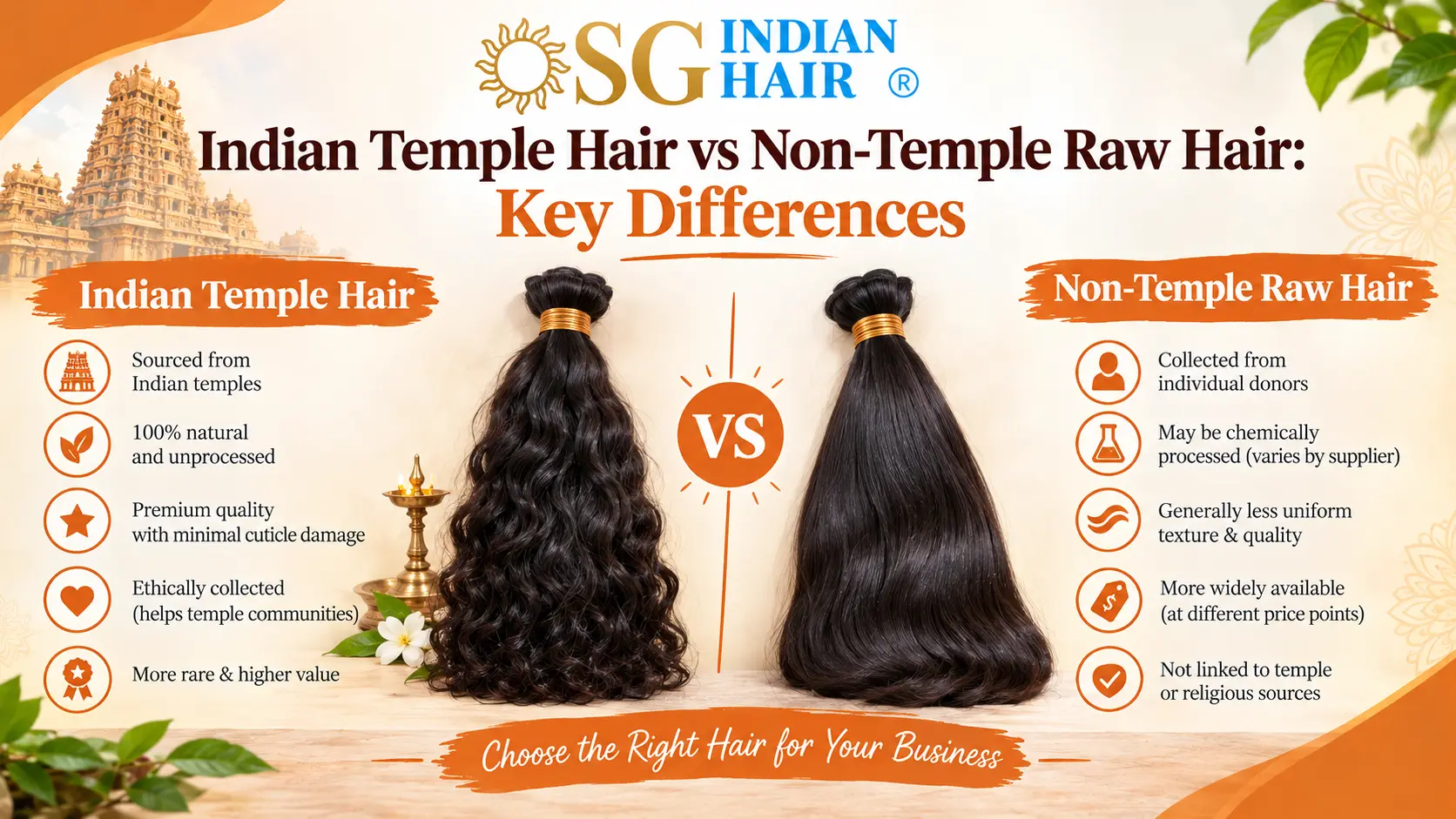
Indian temple hair vs non-temple hair is an important topic for wig makers, hair extension brands, salon owners, and wholesale buyers who want to choose the right human hair for their business. Both types of hair are used to make wigs, extensions, closures, and other hair products, but they can differ in how they are collected, sorted, processed, and prepared for sale.
Imagine you are planning to start a hair extension business. You want to buy natural-looking Indian human hair that feels soft, lasts well, and meets your customers' expectations. During your search, you come across temple hair and non-temple raw hair. Both look similar in product photographs, and suppliers may describe both as premium quality. So, how do you decide which one is right for you?
Understanding the source of the hair, its condition, and the processing methods used can help you make a better buying decision. Let's look at the main differences and what wholesale buyers should check before placing an order.
What Is Indian Temple Hair?
Indian temple hair is human hair collected at temples where people voluntarily shave or donate their hair as part of a religious practice. This hair is gathered through established collection systems and later sorted according to length, texture, colour, and quality.
Many buyers value temple hair because it can include long ponytails with naturally aligned strands. When the hair is collected and handled carefully, it may be suitable for premium hair extensions, wigs, and other products.
However, not every bundle of temple hair has the same quality. Some hair may be mixed with shorter strands, tangled, or unsuitable for particular products. Proper sorting and quality checks are important before the hair is sold to manufacturers or wholesale buyers.
Temple hair may also be available in different grades and processing conditions. Buyers should confirm whether the product is genuinely raw, minimally processed, or chemically treated instead of relying only on the word "temple."
For businesses sourcing Indian human hair, choosing experienced manufacturers is important for finding suitable products and maintaining consistent quality. Wholesale buyers should also consider product variety, processing standards, and the specific requirements of their customers before placing an order.
If you are exploring hair products for your salon or wholesale business, browse our raw Indian human hair manufacturers in India page to discover available lace closure products and explore options for different hairstyling needs.
Comparing available products and confirming specifications with your supplier can help you choose options that match your business requirements.
What Is Non-Temple Raw Indian Hair?
Non-temple raw Indian hair generally refers to hair sourced through channels other than temple donations. Depending on the supplier, it may be collected directly from individual donors, purchased as ponytails, or obtained through local hair collection networks.
The quality of non-temple hair depends on its original condition and how it is collected. For example, a carefully collected ponytail from one person may have consistent length, texture, and strand direction. This can make it a useful choice for manufacturers producing natural-looking hair extensions.
On the other hand, hair gathered from different sources may need more sorting and inspection. Buyers should ask how the hair was collected and whether different donors' hair has been mixed together.
The term "raw" usually indicates that the hair has not undergone extensive chemical or texture-altering processing. However, suppliers do not always use this term in the same way. Always ask about washing, colouring, bleaching, steaming, and other treatments before purchasing.
For salon owners, hair extension brands, and wholesale buyers, choosing trustworthy raw Indian human hair suppliers in India is an important step in maintaining product quality. Before placing a bulk order, compare hair lengths, available textures, product consistency, and supplier information to find options that suit your business needs.
Understanding the differences between hair types and product specifications can help you select suitable hair extensions for your target customers and make more informed purchasing decisions.
Temple Hair vs Non-Temple Hair: Main Differences
The difference between these two types of hair is not simply where the hair comes from. The collection method, strand condition, sorting process, and final preparation all affect the finished product.
1. Hair Collection Method
Temple hair is collected through religious shaving or donation practices at temples. The hair is then gathered and prepared for commercial use.
Non-temple hair is sourced through other collection channels, including individual donors and local hair collectors. Some non-temple hair is sold as complete ponytails, while other hair may be collected from multiple people.
For wholesale buyers, knowing the source helps establish whether the product matches the quality and traceability requirements of their business.
2. Natural Texture and Strand Alignment
Temple hair and non-temple hair can both have natural textures, including straight, wavy, and curly patterns. The original texture depends on the donor, and the final appearance may also depend on processing.
Strand alignment matters because it can affect tangling and the feel of the finished hair product. Hair with cuticles running in the same direction is often preferred for premium extensions because it can help reduce tangling when properly processed and maintained.
However, temple hair is not automatically better aligned than non-temple hair. A well-collected non-temple ponytail may also have excellent strand alignment.
3. Hair Length and Sorting
Hair length is another important factor for buyers. Longer ponytails can be useful for extensions and wigs that require a fuller appearance, while shorter lengths may suit different products.
Temple hair can contain a mixture of lengths, depending on how it is collected and sorted. Non-temple hair can also vary in length, particularly when it comes from multiple sources.
A reliable supplier should clearly explain the available lengths and how the hair is graded. If you are purchasing bulk hair, request samples in the exact lengths you plan to sell.
4. Processing and Quality
Both temple and non-temple hair may undergo cleaning, sorting, and preparation before sale. Some products are sold in a minimally processed state, while others may be coloured, bleached, steamed, or treated to achieve a particular appearance.
This is why buyers should not judge quality by the collection source alone. Ask whether the hair has been chemically treated and whether its texture is natural or has been altered.
When comparing products, check softness, shedding, tangling, strand consistency, and the condition of the cuticles. These checks can help you understand the actual quality of the hair rather than relying only on a supplier's description.
Is Indian Temple Hair Better Than Non-Temple Hair?
The answer depends on what you need. Indian temple hair can be an excellent choice when the hair is carefully collected, properly sorted, and handled with care. It may appeal to businesses looking for hair sourced through temple donation channels.
Non-temple raw hair can also deliver excellent results, especially when it comes from well-selected ponytails and has undergone minimal processing. Some buyers prefer it because they can source specific lengths, textures, or collection types that suit their product range.
Instead of choosing one category automatically, compare the actual samples. Check whether the hair matches the advertised texture, whether the strands remain manageable after washing, and whether the supplier can provide consistent quality across repeat orders.
For a growing hair business, reliable quality and honest product information are often more valuable than a label alone.
If you are comparing suppliers for your salon, hair extension brand, or wholesale business, look for vendors that offer clear product details, consistent quality, and suitable bulk purchasing options. Reviewing the available products can help you make a more informed sourcing decision.
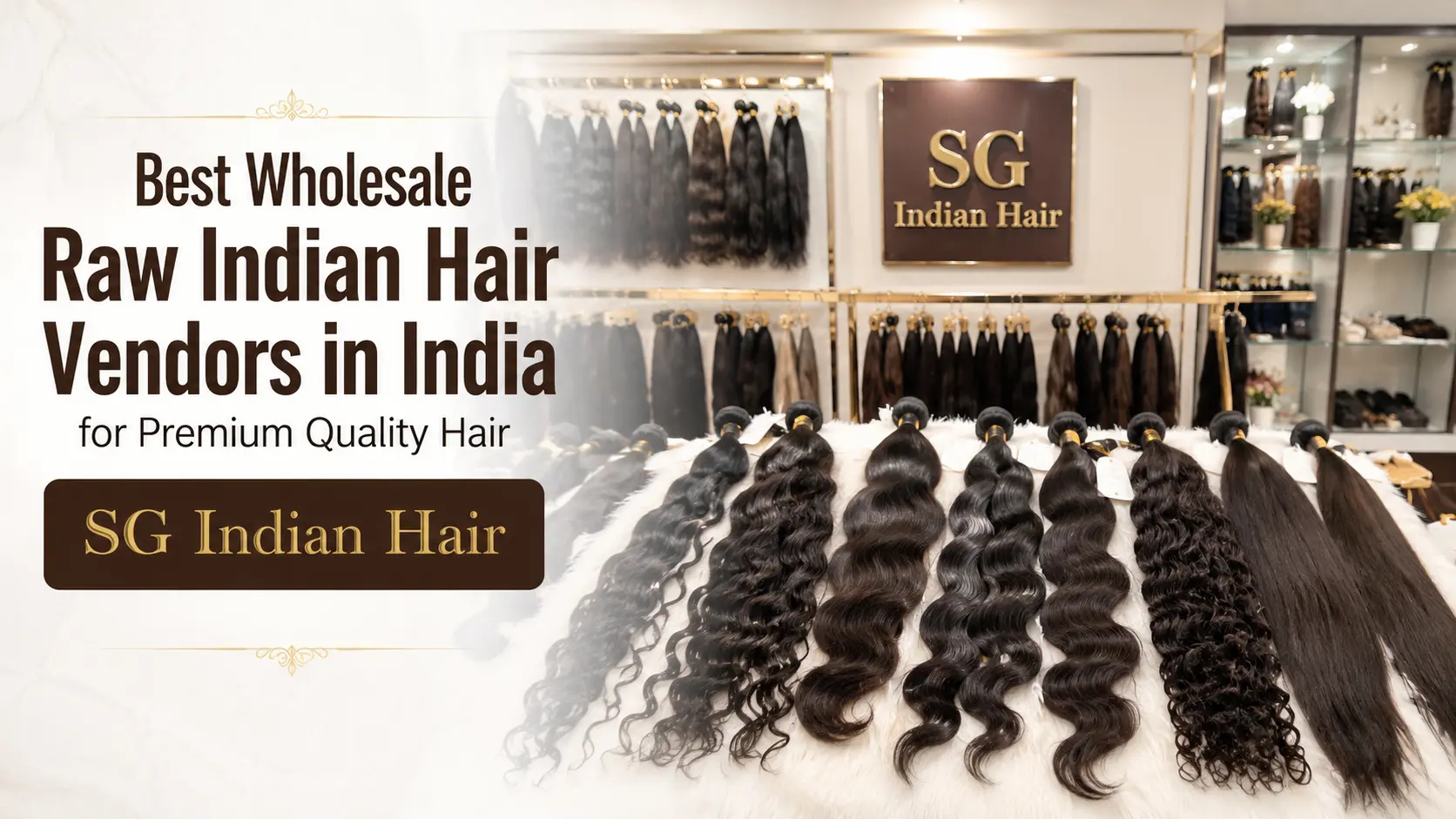
Explore the best raw Indian human hair vendors in India to browse bulk human hair options for your business requirements.
Choosing the right hair supplier can help you maintain product consistency, meet customer expectations, and build long-term relationships with your buyers.
How to Choose an Indian Temple Hair Manufacturer and Exporter
Choosing an Indian temple hair manufacturer & exporter requires more than comparing prices. Your supplier should understand your target market, product requirements, and expected order volume.
Before placing a bulk order, consider these points:
Ask about sourcing: Find out where the hair comes from and how it is collected.
Request samples: Check the texture, length, softness, shedding, and tangling before ordering in bulk.
Confirm processing details: Ask whether the hair is raw, minimally processed, coloured, bleached, or steamed.
Discuss consistency: Make sure the supplier can meet your specifications across repeat orders.
Check documentation: For export purchases, confirm invoices, shipping arrangements, customs documentation, and any destination-specific requirements.
Understand the terms: Clarify minimum order quantities, payment terms, delivery times, and policies for quality-related concerns.
A dependable supplier should answer these questions clearly instead of making unsupported claims about quality or durability.
What Should a Raw Indian Hair Wholesale Supplier Offer?
A good raw Indian hair wholesale supplier should offer clear product details and help buyers choose hair suited to their intended use. This is especially important if you sell extensions, wigs, closures, or other hair products under your own brand.
Look for suppliers who explain their available lengths, textures, grades, and processing methods. Ask whether the hair is single-donor or collected from multiple donors, where that distinction is relevant to your order.
It is also useful to confirm whether the supplier can support your required quantities and maintain similar quality in future shipments. A sample may look excellent, but repeat-order consistency matters when you have customers waiting for products.
For businesses entering the wholesale market, starting with a manageable sample order can help reduce risk. Once you have checked the hair and confirmed that it meets your expectations, you can discuss larger quantities.
Why the Right Indian Temple Hair Supplier Matters
Working with the right Indian temple hair supplier can make purchasing easier and help you build a consistent product range. A professional supplier should provide accurate descriptions, realistic quality expectations, and clear communication throughout the buying process.
Do not make a decision based on price alone. Very low prices may come with differences in length, sorting, processing, or overall consistency. At the same time, a higher price does not automatically guarantee better hair.
Compare samples from different suppliers, ask direct questions, and review the terms before committing to a large order. If you plan to export, check whether the supplier has experience handling international orders and can explain the shipping process.
Taking these steps helps you choose products that suit your customers and your business goals.
Final Thoughts
Indian temple hair vs non-temple hair is best understood by looking at sourcing, strand alignment, length, processing, and overall quality. Temple hair comes from religious donation practices, while non-temple hair comes through other collection channels. Both can be suitable for high-quality human hair products when the hair is collected and prepared properly.
If you are buying for a salon, hair extension brand, or wholesale business, request samples and verify the product details before placing a large order. Focus on the hair's actual condition, the supplier's transparency, and the consistency you can expect over time.
A well-informed buying decision can help you select the right hair for your customers while building a more dependable and successful business.
Frequently Asked Questions
1. What is the main difference between temple hair and non-temple hair?
The main difference between temple hair and non temple hair is the collection source. Temple hair is collected through religious shaving or donation practices, while non-temple hair comes through other channels, such as individual donors and local hair collectors. Both types can vary in quality, length, and processing.
2. Is Indian temple hair better than non-temple hair for extensions?
Whether Indian temple hair is better than non-temple hair depends on the condition of the hair and your product requirements. Both can work well for extensions when they have suitable strand alignment, minimal unwanted processing, and proper quality control. Always compare samples before buying.
3. How can I choose a reliable Indian temple hair manufacturer and exporter?
Choose an Indian temple hair manufacturer & exporter that provides clear sourcing information, product specifications, samples, and export details. Confirm the available lengths, processing methods, minimum order quantity, shipping terms, and quality policies before placing a bulk order.
4. What should I check before buying from a raw Indian hair wholesale supplier?
Before choosing a raw Indian hair wholesale supplier, check the hair's texture, length, softness, shedding, tangling, and processing history. Ask whether the hair comes from single or multiple donors and whether the supplier can maintain consistent quality across repeat orders.
5. How do I find a trustworthy Indian temple hair supplier for bulk orders?
To find a trustworthy Indian temple hair supplier, request samples, compare product specifications, verify business details, and discuss minimum order quantities and delivery terms. Start with a manageable order and assess the hair's quality before committing to larger purchases.