Indian Human Hair Manufacturer vs Hair Vendor: What Should B2B Buyers Choose?
If you are comparing an Indian Human Hair Manufacturer vs Hair Vendor, the right choice depends on what your business needs, such as product quality, pricing, customization, order volume, and long-term supply. For a salon, wig brand, hair extension company, or reseller, understanding this difference can help you avoid costly buying mistakes and choose a supplier that fits your business goals.
When you first enter the Indian hair market, a manufacturer and a vendor may appear to offer almost the same products. Both can provide human hair, different textures, various lengths, and wholesale orders. However, the way they source, process, price, and supply hair can be very different. Knowing these differences is especially important when you plan to build a long-term B2B relationship.
What Is an Indian Hair Manufacturer?
An Indian hair manufacturer is a business that handles some or most of the hair production process on its own. Depending on the company and its facilities, this can include sourcing raw hair, sorting it by quality and length, cleaning it, processing it, preparing wefts, making hair extensions, producing wigs, and checking the final products before they are packed and shipped.
For B2B buyers, working directly with an Indian hair manufacturer can make it easier to understand how the hair is prepared before it reaches the customer. You can ask about where the hair comes from, how it is sorted and processed, what textures and lengths are available, and whether the company can provide natural or colored options. You can also discuss packaging, labeling, and other requirements before placing a large wholesale order. For more product options, explore a Raw Indian Human Hair Supplier offering quality hair extensions.
A manufacturer can also be useful when your business needs products made according to specific requirements. For example, a wig company may need a particular lace type, hair density, color, length, or texture. An experienced manufacturer may have greater control over the production process and can therefore offer more flexibility for customized orders.
What Is an Indian Hair Vendor?
An Indian hair vendor usually focuses on selling, sourcing, or distributing hair rather than manufacturing every product in-house. A vendor may buy hair products from one or several manufacturers and then supply them to salons, retailers, wig businesses, beauty companies, or international buyers. In many cases, vendors make it easier for buyers to find different types of Indian hair without having to contact several manufacturers separately.
This does not automatically mean that a vendor provides poor-quality hair. A reliable Indian hair vendor can be a useful choice, especially when you need different hair products, various lengths and textures, or products from multiple sources. Working with a vendor can also make the purchasing process simpler because the vendor may handle product selection, packaging, order coordination, and shipping.
However, buyers should understand where the hair comes from before placing a large or regular order. If a vendor does not manufacture the product themselves, it is important to ask who processes the hair and where the raw hair is sourced. You can also ask about the type of hair, processing methods, available textures, and quality checks followed before the products are supplied.
Indian Human Hair Manufacturer vs Hair Vendor: Key Differences
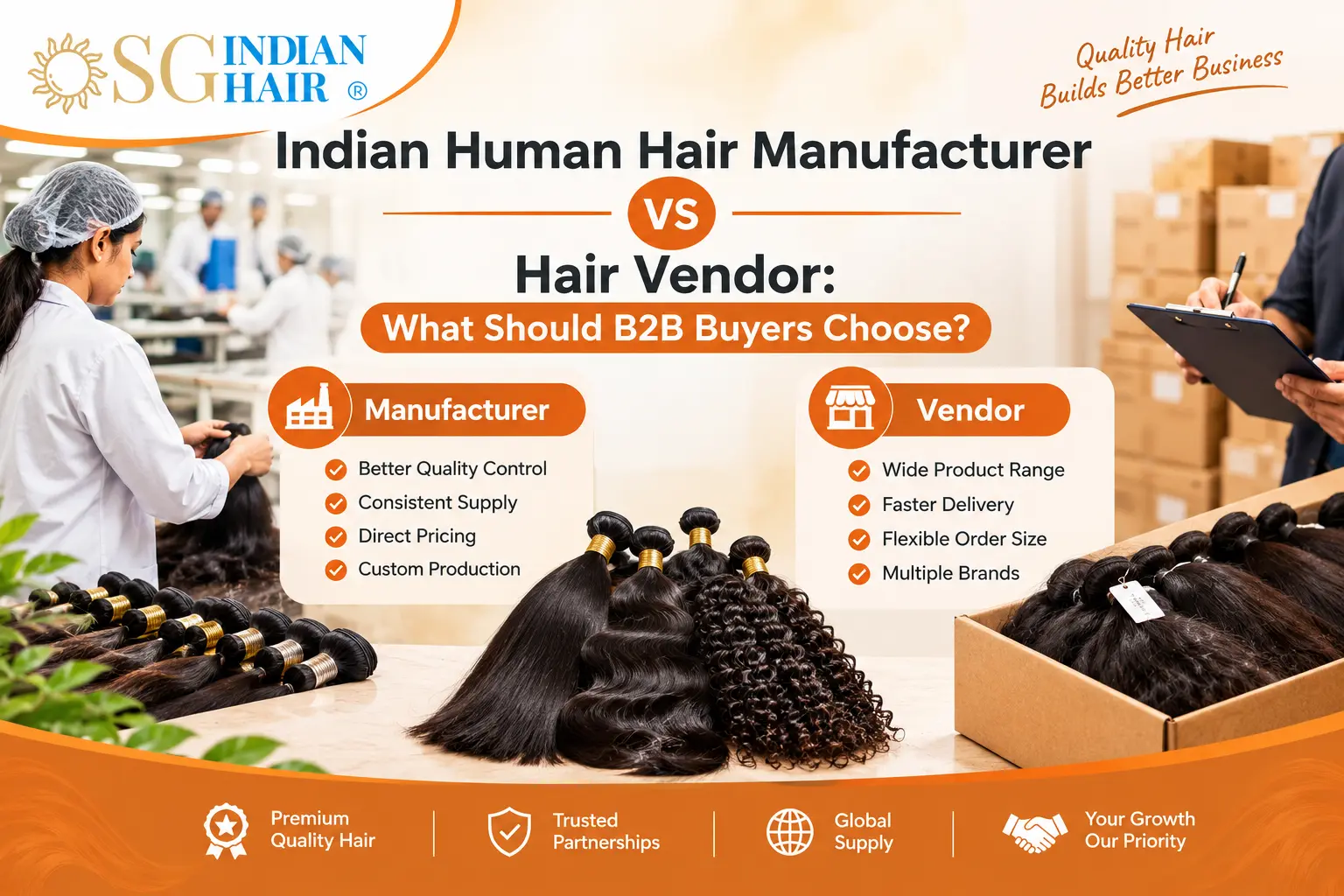
The biggest difference in the Indian Human Hair Manufacturer vs Hair Vendor comparison is control over the product. A manufacturer generally has a closer connection to production, while a vendor may work as an intermediary between the buyer and manufacturer. This difference can affect pricing, customization, communication, order handling, and quality control.
A manufacturer generally has a closer connection to the actual production process, while a vendor may work as an intermediary between the buyer and the manufacturer. This difference can affect several important areas, including pricing, customization, communication, and quality control. When you buy directly from a manufacturer, you can usually communicate with the production team more easily and get clearer information about how the product is made.
For example, imagine you run a growing wig brand. Your first order may be small, but after a few months, your customers may start asking for the same hair in different lengths, textures, or styles. As your business grows, you may also need changes in packaging, hair selection, or order quantities to match what your customers are looking for.
With a vendor, the process may depend more on the vendor's relationship with its own suppliers. The vendor may need to check availability before confirming a specific texture, length, or quantity. This does not mean working with a vendor is always difficult, but it can add another step when you need something that is not part of the vendor's regular stock.
Pricing and Order Costs
Price is one of the first things B2B buyers consider when choosing a supplier. In many cases, buying directly from a manufacturer can reduce the number of intermediaries involved in the supply chain. This may help businesses get more direct communication, better control over product requirements, and a clearer understanding of where the product comes from.
A vendor may purchase products from a manufacturer and add its own margin before selling them to you. This extra margin can affect the final price you pay. However, this does not mean every manufacturer will always offer the lowest price. The final cost can vary depending on several factors, including hair quality, processing, order quantity, packaging, customization, shipping, and other specific requirements.
For B2B buyers, it is important to look beyond the basic price mentioned in a quotation. A lower quote may not always include the same quality, packaging, processing, or delivery terms as another supplier. Two suppliers can offer different prices for products that appear similar, but the actual specifications may be different.
When comparing suppliers, it is also useful to review the available product options and understand what type of hair products they provide for wholesale requirements. For buyers looking for detailed product specifications, quality options, and B2B purchasing choices, the Indian hair manufacturer and supplier page can provide additional information.
Product Customization
Customization is another important factor when choosing between a hair manufacturer and a vendor. If you have specific requirements for your products, working directly with a manufacturer can give you more flexibility and better communication during the production process.
Suppose you want your own packaging, specific hair lengths, a particular hair texture, customized wig construction, or a private-label product. A manufacturer may be in a better position to discuss these requirements directly with the production team. You can explain exactly what you need and ask about available options, minimum order quantities, production time, packaging, and other details before placing an order.
For example, a growing hair brand may want its logo printed on the packaging, a certain length range for its extensions, or a specific wig design that is different from standard products. A manufacturer may be able to make these changes according to the brand's requirements instead of offering only ready-made products.
Some vendors can also arrange customized products, but you should confirm how the process works before placing a large order. In some cases, the vendor may send your request to another supplier or manufacturer. This can make communication slower and may limit how much control you have over the final product.
Quality Control
Quality consistency matters greatly for B2B buyers. Your customers expect the hair they purchase today to have similar characteristics when they order again. This includes the hair texture, length, color, softness, density, and overall appearance. When the quality remains consistent from one order to the next, it becomes easier for businesses to maintain their own product standards and satisfy their customers.
A good Indian hair factory should have clear quality-checking procedures at different stages of production. Buyers should ask how hair is sorted, whether strands are checked for consistency, how products are inspected, and how defects are handled before shipment. It is also useful to understand whether the factory checks the hair before packaging or only performs a final inspection after the product is completed. For buyers who want to learn more about available Indian hair products and sourcing options, exploring a reliable raw Indian hair company India can provide a better understanding of product quality, hair types, and available options.
If you are working with a vendor, ask the same questions and also ask whether the vendor performs its own inspection before shipping the order. A reliable vendor should be able to explain its checking process clearly rather than giving only a general assurance about quality. You can also ask whether samples are checked against the final order and how the company handles products that do not meet the agreed requirements.
Why B2B Indian Hair Suppliers Matter for Growing Businesses
Choosing dependable B2B Indian hair suppliers is about more than finding someone who can send one successful order. A supplier may deliver a good batch once, but what matters for a growing business is whether the same quality can be maintained with every future order.
Imagine that you have built a customer base around a particular type of Indian hair. Customers like its texture, appearance, softness, and overall quality, and your business begins receiving regular orders. Over time, they start to expect the same look and feel whenever they purchase from you. If your supplier suddenly changes the source, hair quality, processing method, or product specifications, your customers may notice the difference.
This is why B2B buyers should evaluate suppliers based on consistency, communication, production capacity, product knowledge, and delivery reliability. A good supplier should be able to clearly explain where the hair comes from, how it is prepared, what options are available, and how orders are handled. They should also be willing to answer questions about hair types, lengths, textures, colors, and customization.
Ask for samples before making a large purchase. Samples give you an opportunity to check the actual product instead of relying only on photographs or descriptions. Examine the hair carefully and compare the sample with the specifications you discussed. Look at the texture, length, density, softness, color, and overall appearance.
What Should You Ask a Human Hair Manufacturer India?
When researching a human hair manufacturer in India, do not hesitate to ask detailed questions before placing an order. A reliable manufacturer should be willing to explain how the hair is sourced, processed, checked, packed, and supplied. Clear communication at the beginning can help you avoid quality problems and misunderstandings later.
Start with the basics:
Where is the hair sourced?
Is the hair raw, virgin, or processed?
What lengths and textures are available?
What processing is used?
What is the minimum order quantity?
Can you provide samples?
Can you customize products?
What packaging options are available?
How is quality checked?
What happens if an order does not meet the agreed specifications?
Clear and direct answers can tell you a lot about how professionally a company handles B2B orders. A manufacturer that is willing to explain its sourcing, production, quality control, customization, and after-sales process can make it easier for buyers to understand exactly what they are ordering. Taking time to ask these questions before making a purchase can help you choose a supplier that fits your business requirements and avoids unnecessary problems with larger orders.
When an Indian Hair Vendor May Make More Sense
Not every buyer needs to work directly with a factory. An Indian hair vendor may be a practical choice if you are testing the market, purchasing several types of hair products, or simply want one supplier to handle different items for you.
For example, a small salon may not need factory-level customization, special packaging, or very large order quantities. In this situation, working with a vendor that already has ready-to-ship products can make the buying process much easier. You can choose from available hair products, place smaller orders, and avoid dealing with the extra steps that often come with direct factory purchasing. If you are comparing suppliers, you can also explore an Indian human hair company that offers different hair products for salon and business requirements. This can help you understand the available options before deciding whether a vendor or direct manufacturer is more suitable for your order size.
A vendor can also be helpful when you need products from different manufacturers but do not want to manage several separate production relationships. Instead of contacting multiple factories, checking different product ranges, and handling communication with each supplier, you can work with one vendor that offers a wider selection.
The key is to understand the vendor's supply chain and make sure the products meet your standards. A reliable vendor should be able to clearly explain where the hair comes from, what products they can supply, and what you can expect from each order. Taking a little time to check these details can help you choose a supplier that fits your business size, budget, and purchasing needs.
Indian Hair Factory or Vendor: Think About Your Long-Term Goals
The right choice becomes easier when you consider where your business is going and what you need from a hair supplier in the long run.
If you are starting with small orders and mainly need ready-made products, a vendor may be suitable for your business. This can be a simple option when you want to test different hair products, understand what your customers prefer, and avoid placing large orders at the beginning. You can start with the products you need and increase your order size as your business grows.
For established brands, a direct relationship with an Indian hair factory can also make it easier to discuss repeat orders, product development, packaging, quality requirements, and future business plans. Instead of treating every order as a separate purchase, you can build an ongoing relationship with the manufacturer and communicate your requirements more clearly over time. This may also help when you want to introduce new products or increase your wholesale order volume.
At the same time, choosing a manufacturer does not automatically mean you will receive better products or service. The company you choose should still be judged by its actual products, hair quality, pricing, communication, production capacity, order handling, and ability to meet your requirements. Ask questions before placing a large order and, where possible, start with samples so you can check the hair for yourself.
How to Choose Between Manufacturer and Vendor
Before making your final decision in the Indian Human Hair Manufacturer vs Hair Vendor comparison, create a simple checklist and use it for every supplier you are considering. Start by looking at your order size, budget, required hair quality, customization needs, delivery time, and future business plans. This makes it easier to compare suppliers fairly instead of choosing based on price alone.
Check how much hair you need and whether the supplier can handle your current order size. A small buyer may be comfortable working with a hair vendor, while a growing business may need the larger production capacity and direct support that a manufacturer can provide. Also ask about minimum order quantities, available hair types, lengths, textures, colors, and whether custom orders are possible.
For international B2B buyers, ask clear questions about shipping terms and delivery arrangements before confirming a large order. Check whether the supplier handles export documentation, commercial invoices, packing lists, customs-related paperwork, and other documents required for your country. Also confirm available payment methods, payment schedules, packaging standards, and whether the supplier provides tracking information after dispatch.
Do not forget to discuss the replacement or complaint policy. Ask what happens if the delivered hair has a quality problem, the order is incomplete, or the product is different from the approved sample. A written replacement policy can help prevent confusion later.
Final Thoughts
The choice between an Indian Human Hair Manufacturer vs Hair Vendor depends on your business model and purchasing requirements. A manufacturer can offer closer access to production and may be suitable for customization and regular wholesale orders. A vendor can provide convenience, product variety, and a simpler buying process.
Whether you choose a manufacturer or vendor, focus on transparency, consistent quality, clear communication, and reliable supply. Request samples, ask detailed questions, and test the relationship with a manageable order before scaling up.
For a growing hair business, the best supplier relationship is not simply about buying hair at a low price. It is about finding a dependable partner who understands your requirements and can support your business as your orders grow.
Frequently Asked Questions
1. What is the main difference between an Indian hair manufacturer and an Indian hair vendor?
An Indian hair manufacturer is involved in producing or processing the hair, while an Indian hair vendor mainly sells or distributes products. Some vendors may source products from multiple manufacturers, so buyers should always ask about the actual production source.
2. Is a human hair manufacturer in India better for bulk orders?
A human hair manufacturer India can be a practical option for bulk buyers because direct communication with production may make it easier to discuss quantities, customization, quality standards, and repeat orders. However, buyers should compare suppliers based on their specific requirements.
3. How can I verify B2B Indian hair suppliers?
When comparing B2B Indian hair suppliers, request product samples, ask about sourcing and processing, confirm MOQ, discuss quality checks, and review packaging and shipping details. A trial order can also help you evaluate consistency before placing a larger order.
4. What should I ask an Indian hair factory before ordering?
Before ordering from an Indian hair factory, ask about hair sourcing, processing, available textures and lengths, customization, minimum order quantity, quality inspection, production capacity, delivery time, and policies for damaged or incorrect products.
5. When should a buyer choose a hair manufacturer vs vendor?
The hair manufacturer vs vendor decision depends on your business needs. A manufacturer may suit brands requiring customization and regular bulk production, while a vendor can be useful for ready-made products, smaller orders, or businesses that want access to different product options from one supplier.





 (2).jpg)
.jpg)


